Table of Content
(502 views)
Published:March 5, 2026 at 9:18 am
Last Updated:5 Jun 2026 , 10:01 am

Key Takeaways:
- How RNG technology keeps every online poker hand completely random, fair, and impossible to predict or manipulate.
- Discover why certified RNG systems are essential for player trust, gaming compliance, and secure poker platform operations.
- Explore the difference between True RNG and Pseudo RNG and why modern poker software relies on advanced algorithm-based randomness.
- Understand how leading poker platforms combine RNG certification, encryption, and anti-cheating systems to ensure fair gameplay.
- Find out how scalable White Label Poker Software uses RNG infrastructure to support multiplayer poker, real-time gaming, and secure transactions globally.
Introduction to RNG in Online Poker Platforms
Random Number Generator (RNG) technology is the foundation of fairness in online poker. It ensures that every card dealt is completely random and impossible to predict or manipulate. In modern platforms powered by White Label Poker Software, RNG systems replicate the randomness of physical card shuffling, allowing players to trust that each hand is fair, unbiased, and secure.
Online poker has evolved into a highly sophisticated digital environment. Behind every table, a complex system ensures the game operates just like a real-world poker room. Players may see cards appear instantly on their screens, but in reality, multiple layers of algorithms and security checks are working simultaneously.
RNG technology ensures that the outcome of each hand is independent from previous results. This randomness is essential for maintaining the integrity of poker games and protecting players from unfair advantages. Without RNG systems, online poker would lose its credibility.
For businesses launching platforms using white label poker software platforms or turnkey poker software, RNG integration is one of the most critical components. It guarantees fair gameplay, regulatory compliance, and player trust, which are essential for long-term success in the online gaming industry.
What is a Random Number Generator (RNG)?
A Random Number Generator is a specialized algorithm designed to produce sequences of numbers that cannot be predicted. In online poker, these numbers determine how cards are shuffled and dealt. RNG technology ensures that every game round remains unpredictable, replicating the randomness found in traditional poker tables.
Definition and Core Concept of RNG
An RNG is a mathematical system that continuously generates random numbers used to determine outcomes in digital games.
In online poker platforms, RNG is responsible for shuffling the virtual deck and selecting cards for players. The process occurs in milliseconds and ensures that no player, operator, or external entity can predict the next card.
Key characteristics of RNG systems include:
- Continuous number generation even when no game is active
- Use of complex algorithms to create unpredictable sequences
- Integration with game engines to determine card distribution
- Independent outcomes for every poker hand
- Security layers preventing external interference
- Real-time processing for multiplayer poker tables
- Compatibility with scalable poker software platforms
- Certification requirements from independent testing labs
- Integration with online poker software solutions
This technology ensures that digital poker remains as fair and unpredictable as traditional card games.
Why RNG Is Essential for Online Poker Platforms
RNG systems are essential because they maintain fairness, transparency, and trust in online poker games.
In physical poker rooms, dealers shuffle cards manually. In online environments, RNG replaces this process. Without it, players would not trust the platform, and regulators would not approve the software.
Important benefits include:
- Ensures unbiased card distribution
- Prevents predictable game patterns
- Maintains player confidence
- Enables multiplayer poker games across global platforms
- Supports secure white label poker apps
- Allows operators to launch fair gaming platforms quickly
- Meets regulatory requirements for licensed operators
- Protects game integrity against manipulation
Operators using ready-made poker software or poker software white label solutions rely heavily on RNG to create a trusted gaming experience.
Difference Between True RNG and Pseudo RNG
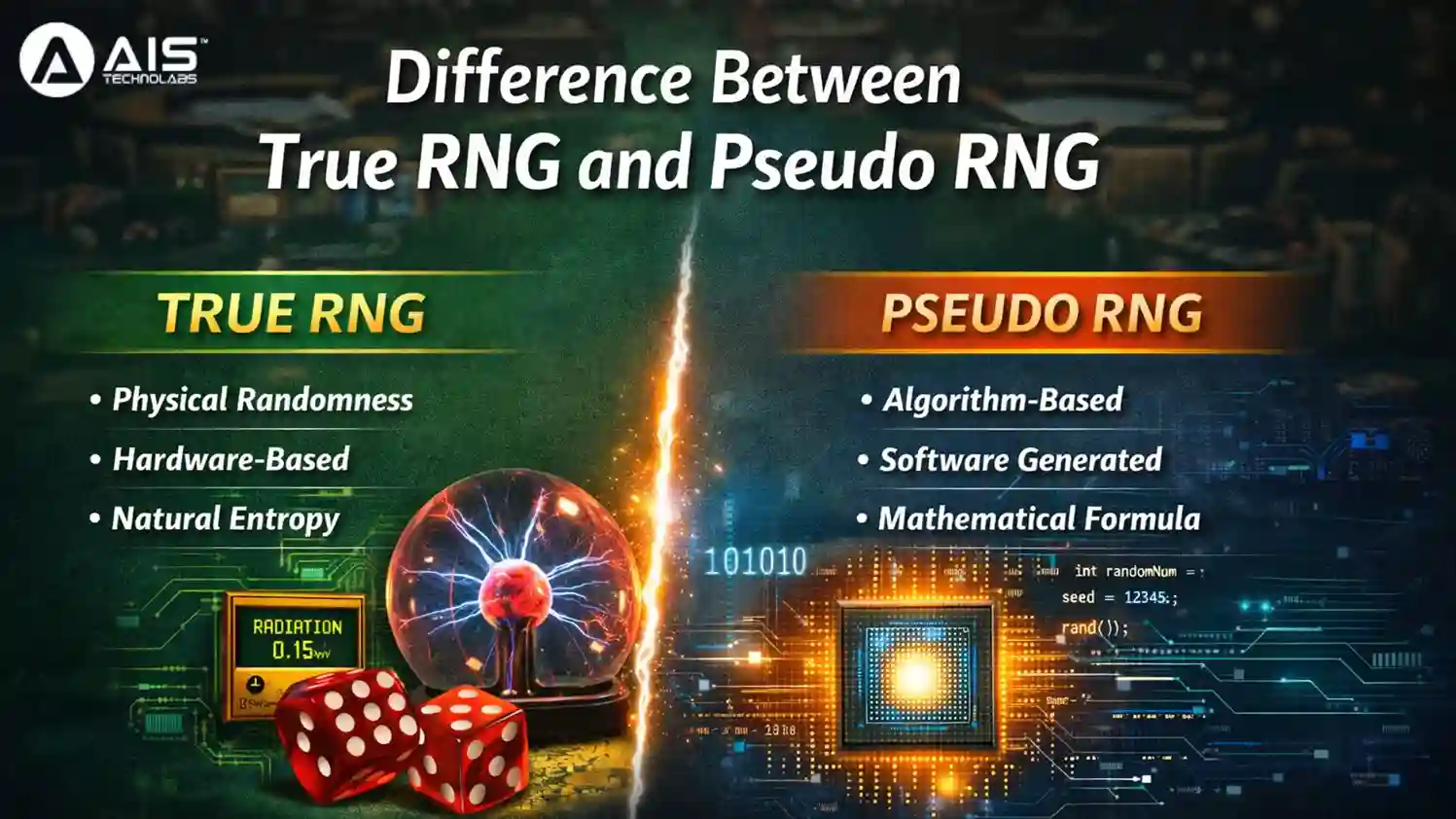
There are two primary types of RNG systems used in digital gaming: True RNG and Pseudo RNG.
True RNG relies on physical processes such as atmospheric noise or hardware-generated randomness. These are commonly used in cryptographic applications.
Pseudo RNG, on the other hand, uses mathematical algorithms to generate sequences of numbers that appear random. Most online poker platforms use high-quality pseudo RNG systems because they are efficient and scalable.
Key differences include:
- True RNG uses physical randomness sources
- Pseudo RNG relies on mathematical algorithms
- Pseudo RNG is faster and more scalable for gaming
- True RNG requires specialized hardware
- Pseudo RNG is easier to integrate into white label poker solutions
- Both require testing and certification for fairness
- Pseudo RNG is widely used in turnkey poker software
Modern poker platforms rely on highly advanced pseudo RNG systems that are virtually impossible to predict.
How RNG Works in Online Poker Platforms
RNG systems operate by continuously generating random numbers that determine card order in a virtual deck. When a player joins a game, the software selects numbers corresponding to specific cards. This process ensures that each hand is independent and unpredictable.
The Mathematical Algorithm Behind RNG
The core of RNG technology is a complex mathematical algorithm designed to generate unpredictable sequences of numbers.
These algorithms run continuously in the background and produce thousands of numbers every second.
Key elements include:
- Advanced cryptographic algorithms
- Seed values used to initiate number sequences
- Continuous number generation
- Integration with multiplayer poker engines
- Mathematical randomness validation
- Compatibility with poker platform technology
- Optimization for large-scale poker networks
- Support for secure online poker platforms
This system ensures that the digital deck behaves just like a real shuffled deck.
How Cards Are Shuffled and Dealt Using RNG
In online poker, cards are not physically shuffled. Instead, RNG determines the order of cards in the deck.
Before each hand begins, the system generates random numbers that correspond to specific card positions.
The process includes:
- Virtual deck creation
- RNG assigning numbers to card positions
- Random shuffling of the digital deck
- Automatic dealing to players
- Independent card selection for each player
- Real-time distribution across multiplayer tables
- Secure server processing
- Instant updates to the poker interface
This process happens within milliseconds and is invisible to players.
Ensuring Randomness in Each Poker Hand
Each poker hand must remain independent to ensure fairness.
RNG systems guarantee this by continuously generating new sequences of numbers and never repeating patterns.
Key mechanisms include:
- Continuous algorithm execution
- Dynamic seed value changes
- Independent shuffle operations
- Randomized deck creation for every hand
- Isolation of game rounds
- Secure server-side processing
- Monitoring for unusual patterns
- Integration with RNG certified poker software
These systems make it impossible for players to predict future outcomes.
Key Components of RNG Systems in Poker Software
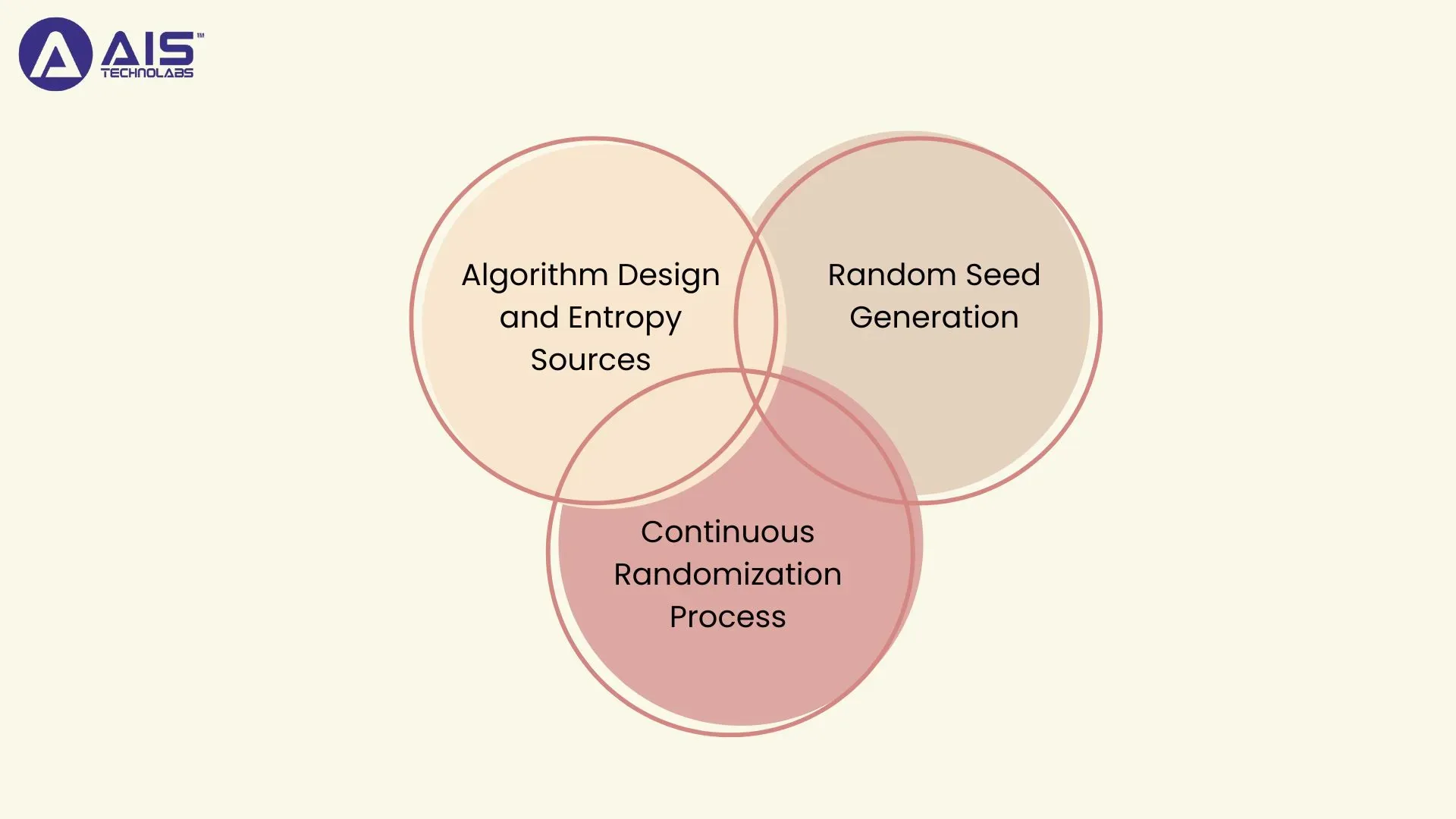
RNG systems consist of multiple components working together to ensure randomness, security, and fairness.
Algorithm Design and Entropy Sources
The strength of RNG systems depends heavily on the design of their algorithms and entropy sources.
Important components include:
- Cryptographic algorithm frameworks
- Entropy from system events
- Network activity randomness
- Hardware input signals
- Server clock variations
- Secure mathematical models
- Continuous algorithm testing
- Compatibility with scalable poker software platforms
These components ensure that RNG outputs remain unpredictable.
Random Seed Generation
A seed is the starting value used by RNG algorithms to generate random sequences.
Modern poker platforms generate seeds using multiple unpredictable inputs.
Examples include:
- System timestamps
- Player activity data
- Hardware-level inputs
- Server operations
- Network latency variations
- Randomized system processes
- Secure entropy pools
Seed generation significantly enhances randomness.
Continuous Randomization Process
RNG systems do not activate only during gameplay. They run continuously.
This continuous generation prevents players from identifying patterns.
Key advantages include:
- Continuous number production
- Pattern prevention
- High-speed randomness
- Integration with multiplayer poker engines
- Improved fairness validation
- Stronger algorithm unpredictability
- Real-time deck reshuffling capabilities
RNG Certification and Testing for Fair Gameplay
RNG systems must undergo strict testing to ensure fairness and compliance with international gaming standards.
Independent Testing Laboratories
Third-party testing organizations evaluate RNG systems before platforms can operate legally.
Examples of testing processes include:
- Statistical randomness testing
- Algorithm validation
- Long-term simulation tests
- Security vulnerability analysis
- Game outcome distribution analysis
- Compliance reporting
- Software certification procedures
- Ongoing monitoring of poker platforms
These tests ensure that players receive fair outcomes.
Compliance with Global Gaming Standards
Online poker operators must comply with strict industry regulations.
Common requirements include:
- Certified RNG algorithms
- Transparent game fairness reporting
- Regulatory approval for gaming licenses
- Compliance with responsible gaming technology
- Integration with KYC and AML poker software
- Payment security through PCI DSS compliant payment systems
- Data protection under GDPR compliant poker platforms
These standards protect both players and operators.
How Platforms Prove Game Fairness
Online poker platforms provide transparency by publishing testing reports and certification details.
Methods include:
- RNG certification documentation
- Audit reports from testing labs
- Fairness verification tools
- Player statistics transparency
- Randomness validation dashboards
- Regulatory compliance records
- Public testing certificates
Security Measures That Protect RNG Systems
RNG systems are protected by multiple layers of cybersecurity and server architecture.
Encryption and Secure Game Servers
Poker platforms rely on advanced encryption to protect gameplay data.
Security methods include:
- End-to-end data encryption
- Secure game servers
- Firewalls and intrusion detection systems
- Secure communication protocols
- Encrypted player transactions
- Server redundancy for reliability
- Secure backend architecture
Anti-Cheating Mechanisms
Modern poker platforms use AI-driven systems to detect suspicious activity.
Examples include:
- Player behavior monitoring
- Bot detection algorithms
- Collusion detection systems
- Suspicious pattern analysis
- Table behavior tracking
- Real-time fraud detection
- Automated player flagging
Protection Against Algorithm Manipulation
RNG algorithms are protected from external interference.
Security strategies include:
- Isolated server environments
- Code obfuscation techniques
- Restricted system access
- Multi-layer authentication
- Continuous security audits
- Server integrity monitoring
Common Myths About RNG in Online Poker
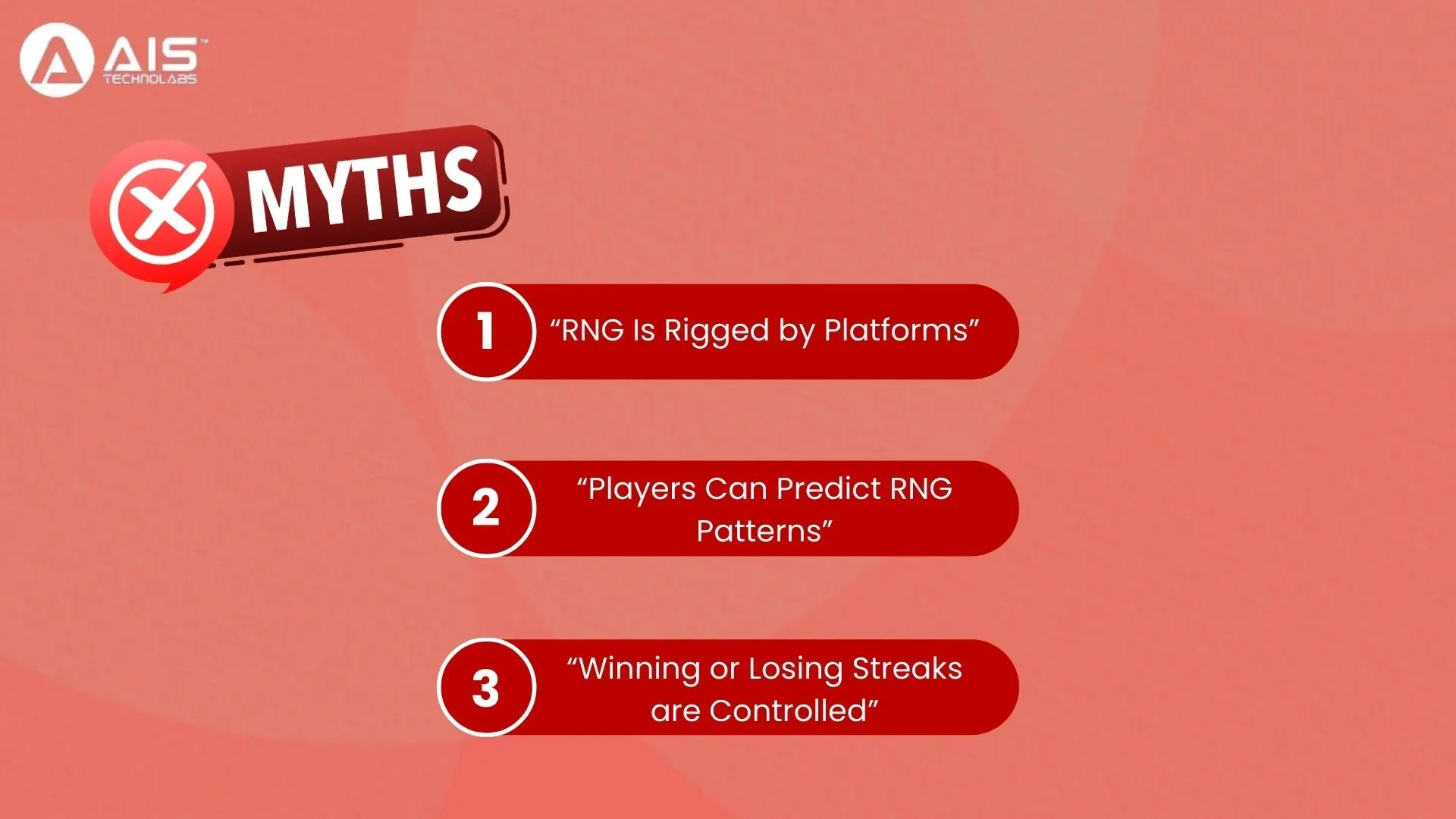
Many misconceptions exist about RNG technology in poker platforms.
“RNG Is Rigged by Platforms”
This is one of the most common myths in online poker.
Licensed platforms cannot manipulate RNG systems because independent laboratories audit them regularly. Manipulation would result in immediate license revocation and legal penalties.
“Players Can Predict RNG Patterns”
High-quality RNG algorithms are designed to prevent pattern recognition.
Because numbers are generated continuously and seeds change frequently, predicting future outcomes is practically impossible.
“Winning or Losing Streaks Are Controlled”
Poker streaks occur naturally due to probability.
Even in physical poker games, players can experience long winning or losing streaks. RNG systems simply replicate real-world randomness.
Regulatory Requirements for RNG in Online Poker Platforms
Online poker operators must comply with strict regulatory frameworks to ensure fair gaming.
Licensing Authorities and Compliance
Major gaming jurisdictions require certified RNG systems before granting licenses.
Examples include regulatory authorities that oversee fairness testing and operational standards.
Operators using regulated white label poker platforms must meet these standards to operate legally.
Industry Standards for RNG Implementation
Industry guidelines ensure that RNG algorithms meet statistical randomness standards.
Key requirements include:
- Independent certification
- Randomness testing
- Secure algorithm design
- Compliance documentation
- Regular software updates
Responsible Gaming and Transparency
Responsible gaming practices require platforms to operate transparently.
Operators must provide clear fairness policies and allow regulators to audit systems.
Benefits of RNG Technology for Online Poker Platforms
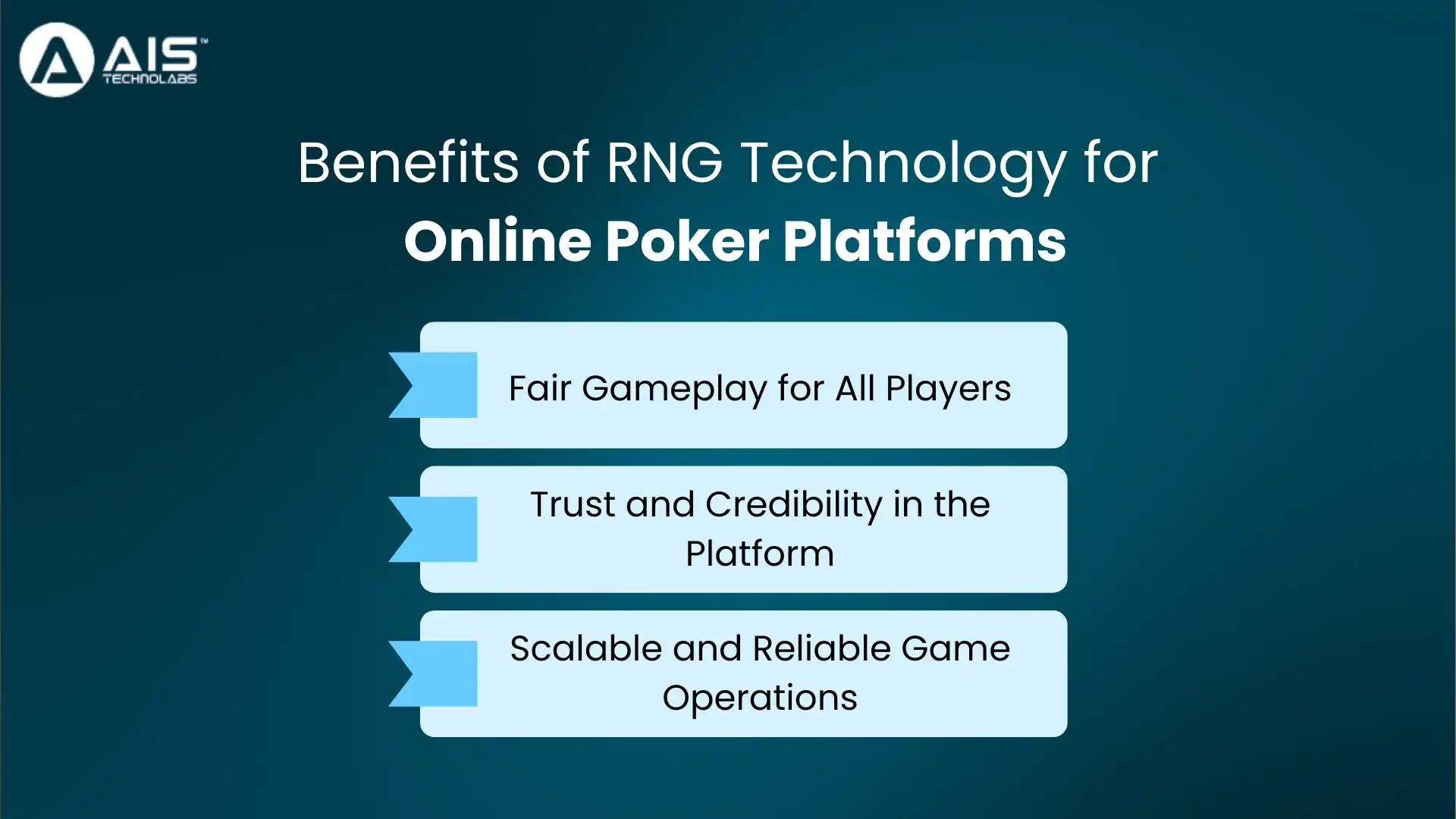
RNG technology delivers critical benefits for both players and operators.
Fair Gameplay for All Players
Fair gameplay is the most important benefit of RNG systems.
Players trust platforms that use certified randomness technology because outcomes remain unbiased.
Trust and Credibility in the Platform
Trust is essential for the success of any online poker platform.
Platforms that use RNG certified poker software and licensed technology gain credibility among players.
Scalable and Reliable Game Operations
RNG systems allow poker platforms to support thousands of simultaneous players.
This scalability is essential for operators launching platforms using white label poker software platforms.
Best Practices for Implementing RNG in Poker Software Development
Operators and developers must follow strict best practices when implementing RNG technology.
Using Certified RNG Algorithms
Only certified algorithms should be used in poker platforms.
Certified RNG systems ensure compliance with international gaming regulations.
Regular Audits and Testing
Continuous testing ensures long-term fairness.
Regular audits verify that the algorithm remains statistically random and secure.
Integration with Secure Gaming Infrastructure
RNG systems must be integrated into secure server environments.
Platforms built using turnkey poker software often include built-in RNG certification and security architecture.
Future of RNG Technology in Online Poker Platforms
RNG technology continues to evolve alongside advancements in gaming software.
AI and Advanced Randomization Techniques
Artificial intelligence is beginning to enhance randomness validation.
AI systems can analyze billions of game outcomes to detect anomalies and improve fairness monitoring.
Blockchain-Based Fairness Verification
Blockchain technology may soon allow players to verify game fairness independently.
Provably fair systems could make RNG results transparent and immutable.
Next-Generation Secure Gaming Systems
Future poker platforms will combine AI security, blockchain transparency, and advanced RNG algorithms to create even more trusted gaming environments.
These innovations will support the growing demand for secure online poker platforms and scalable online poker software solutions.
Conclusion
Random Number Generator technology is the backbone of fairness in modern online poker platforms. It ensures that every card dealt is unpredictable, unbiased, and impossible to manipulate.
For operators launching platforms using White Label Poker Software, integrating certified RNG systems is essential for regulatory compliance, player trust, and long-term business success.
Companies like AIS Technolabs specialize in building advanced poker platforms that combine secure RNG algorithms, scalable infrastructure, and modern gaming features. Their solutions help operators launch poker apps quickly, enter the iGaming market efficiently, and deliver fair gaming experiences to players worldwide.
If you're planning to start an online poker business or build a secure poker platform, the right technology partner can make all the difference. Contact us to explore scalable poker software solutions designed for modern gaming operators.
Disclaimer:
This blog is intended for informational and educational purposes only. We do not promote or facilitate gambling activities in any country where it is considered illegal. Our content is focused solely on providing knowledge about legal and regulated markets. We only work with operators and platforms that are licensed and comply with the laws of jurisdictions where casino gaming is permitted. We do not operate or endorse any form of gambling in restricted regions. In countries where only skill-based games are allowed, our involvement is strictly limited to those games.
We believe gambling should be an entertaining and responsible activity. Our goal is to ensure that the platforms we review uphold the highest standards of fairness, transparency, and player safety.
Launch Your Online Poker Platform with Trusted Technology
FAQs
Ans.
RNG (Random Number Generator) is a technology used in online poker platforms to ensure that cards are shuffled and dealt randomly. It uses mathematical algorithms to generate unpredictable numbers that simulate the randomness of real card shuffling. This guarantees fair gameplay and prevents manipulation by players or operators.
Ans.
RNG works by continuously generating random numbers that correspond to specific cards in a virtual deck. When a poker hand begins, the system instantly selects numbers from the RNG sequence to determine the order of the cards. This process ensures every hand is independent and completely unpredictable.
Ans.
Yes, reputable online poker platforms use RNG-certified poker software tested by independent auditing agencies. These systems are regularly evaluated to ensure fairness, randomness, and compliance with gaming regulations. Encryption, secure servers, and regular testing help maintain a safe and transparent gaming environment.
Ans.
No, players cannot predict or manipulate RNG outcomes. Modern RNG systems use complex algorithms and continuously changing seeds that make patterns impossible to identify. Additionally, security mechanisms and monitoring systems prevent any attempts to interfere with the randomness of card distribution.
Ans.
RNG is crucial because it ensures that every poker hand is dealt randomly and fairly. Without RNG technology, online poker platforms would not be able to replicate the unpredictability of real card games. It builds player trust, maintains platform credibility, and supports responsible and transparent online gaming.

Mary Smith
Mary Smith excels in crafting technical and non-technical content, demonstrating precision and clarity. With careful attention to detail and a love for clear communication, she skillfully handles difficult topics, making them into interesting stories. Mary's versatility and expertise shine through her ability to produce compelling content across various domains, ensuring impactful storytelling that resonates with diverse audiences.
 ASIA PACIFIC