Table of Content
(508 views)
Published:December 18, 2025 at 8:53 am
Last Updated:24 Apr 2026 , 8:17 am

Introduction
One of the most popular digital currencies in the casino industry is Bitcoin. Naturally, as its use grows, worries regarding regulation and legality surface. Many operators who want to start a Bitcoin or cryptocurrency-based casino sometimes encounter problems due to unclear laws and different political views.
The same crucial concerns are typically asked by casino looking to operate legally: Is it acceptable to gamble with digital currency? Is establishing a Bitcoin casino require a license? The answers aren't always simple. The rules regulating bitcoins continue to change and lack a common norm.
Every nation and area has its own set of laws regulating Bitcoin gambling. For operators entering the market, being informed is so crucial.
The following article by AIS Technolabs offers helpful data and insights into how different countries' Bitcoin gambling laws operate. Come learn how strict these laws are and what casino operators ought to understand before implementing a safe and compliant Bitcoin gaming platform
Bitcoin Gambling Worldwide
One of the first areas that promoted the use of cryptocurrency was the European Union. Nevertheless, despite this enhanced approach, all crypto-related activities in EU nations are still not subject to a single, unified regulation. Rules may vary from one member state to another and are constantly changing.
Malta is a global leader in structured currency laws. Through frameworks like the MDIA, ITAS, and VFA, it was among the first nations to enact explicit law relating to blockchain and digital assets. As a result, Malta frequently serves as a model for legal frameworks which promote cryptocurrency.
The situation is more complex in the USA. Federal laws such as the Unlawful Internet Gambling Enforcement Act (UIGEA) restrict payments for online gambling that are banned by state or federal law. As a result, before joining the market, operators have to carefully think about state-level limitations, and Bitcoin gambling services may still be subject to legal action.
Some nations adopt a hybrid approach. For example, digital currency exchanges are legally permitted to operate in South Korea, but bitcoin usage is restricted. However, some governments are publicly accepting virtual currencies. El Salvador become the first nation to recognize Bitcoin as legal money, generating headlines all over the world.
While it has strict laws regarding cryptocurrency gaming, the UK views Bitcoin as a store of value. Casinos that provide Bitcoin-based betting must provide unambiguous evidence of their funding source prior to filing a request for a license. While it may take some time, this approach helps guarantee transparency and legal compliance.
If AIS Technolabs wants to assist operators build Bitcoin games that are both compliant and ready for the future, it is essential that they grasp these local variations. Businesses can enter the digital currency gambling market with confidence and lower risk thanks to clear legal information.
Key Facts On Bitcoin Gambling Legality
Is utilizing digital currencies for gaming legal? Which laws apply to digital currency-driven gaming platforms? What is necessary to launch a Bitcoin casino that conforms with all legal specifications? These kinds of inquiries can cause more confusion than clarity for a lot of operators.
The legal environment around Bitcoin games is changing rapidly on an international level. Numerous nations are still debating how to control the usage of cryptocurrencies in online gaming since interest in them is constantly growing. There isn't a single, universal solution at moment. Yet, there are a few points that every operator should be cognizant of.
1. No clear global laws yet: There aren't any laws specifically designed for Bitcoin gambling in the majority of places. There is often a legal gray area since it is neither explicitly permitted nor outright banned.
2. The government's viewpoint has shifted: Many authorities have adopted Bitcoin and other cryptocurrencies at a rapid pace. Despite increased discussions about regulating Bitcoin and blockchain-based services, numerous nations still fail to officially acknowledge Bitcoin as legal cash. As a result, traditional gaming rules created for fiat money aren't typically implemented to bitcoin casinos.
3. Strict gambling regions still pose risks: Authorities may still take action against Bitcoin gambling sites or players in countries like the United States where online gambling is strictly regulated or banned even if cryptocurrency laws are still uncertain.
4. Player anonymity has limits: In Bitcoin casinos, players could have more privacy. Yet, respectable platforms still follow anti-money laundering (AML) and counterterrorism funding (CTF) laws. This means some form of identity verification is usually required.
5. Crypto-friendly licenses are available: Casinos that accept Bitcoin are already given gambling licenses by some foreign governments, such Curaçao. As long as operators abide by all license specifications, these regulators oversee cryptocurrency-based gaming activities and offer a legal framework.
At AIS Technolabs, we help operators understand these legal basics and build Bitcoin casino platforms that align with licensing requirements and compliance standards across different regions.
How Do Bitcoin Casinos Work?
A cryptocurrency wallet and some Bitcoin purchased with ordinary money are prerequisites for starting to play at an online Bitcoin casino. Players can select from a variety of Bitcoin casinos or betting sites once the wallet is configured. Most of the time, consumers can use the same bitcoin wallet at other casinos, which is convenient.
There are two main characteristics that drive players to Bitcoin casinos. One is increased privacy compared to traditional payment methods. The other is the potential value change of Bitcoin itself, which may increase the overall worth of winnings over time. For many users, both benefits play an important role.
Bitcoin casinos function similar as conventional internet casinos in terms of gaming. In addition to putting bets, players can access well-known casino games and take advantage of promotional bonuses that are similar to those found on fiat-based platforms. The payment system, not the experience, is the primary distinction.
Additionally, the software used by Bitcoin casinos is essentially identical to that of conventional gaming systems. Crypto casino platforms at AIS Technolabs have been built utilizing tried-and-true casino software frameworks and enhanced with cryptocurrency payment integration, ensuring smooth gameplay, safe transactions, and an enjoyable player experience.
What About Advantages?
Both gamers and casino operators can gain greatly from bitcoin gaming in a number of ways. Privacy is one of the main advantages. Because Bitcoin transactions don't rely on traditional banking systems, user data and personal information are better protected.
Reduced transaction costs are a further significant benefit. Players and operators avoid many of the typical banking fees because there are no banks involved. Additionally, Bitcoin payments are extremely safe since each transaction is secured by modern blockchain technology.
Speed is another key advantage. Relative with traditional payment methods, deposits and withdrawals are frequently completed far more quickly. furthermore, unlike fiat currencies, which can help maintain value over time, Bitcoin is not directly impacted by inflation.
The emergence of digital currency has also brought about fresh perspectives on gaming and online payments. Although Bitcoin has numerous benefits, there are risks related to it because of price swings and technological advances. Yet, cryptocurrency gambling offers numerous companies great chances.
At AIS Technolabs, we assist operators in using these advantages while building Bitcoin video games that are legal, secure, and ready for the future.
Should a Bitcoin Casino Have a Gambling Licence?
The iGaming industry needs a gaming license. For most online casinos, holding a valid license is required to open a merchant bank account and work with traditional payment providers. However, not all casinos clearly display whether they are licensed, especially those operating with cryptocurrency. One of the most common options among platforms that provide this information is a Curaçao gaming license.
One of the most inexpensive and readily available jurisdictions for online casino license is Curaçao. When it comes to accepting digital currencies, it provides flexibility, an easy application process, and clear guidelines. Because operators aren't tied to a single digital currency, it is easier to invest in Bitcoin and other cryptocurrency-specific players.
When a casino operates entirely with Bitcoin, payment processing can be handled internally using blockchain technology. Deposits and withdrawals move directly between the player’s wallet and the casino’s wallet, often within minutes, without involving banks or third-party payment services. Because of this setup, some operators view a gambling license as optional rather than mandatory for accepting Bitcoin payments.
But from a player's viewpoint, licensing is still essential. A large number of players expect that a Bitcoin casino will provide the same degree of security and confidence as a regular online casino. Users can feel more confident realizing that the platform is run honestly, adheres to rules, and is supervised by a third party when it has a recognized gaming license.
Trust and player safety are always of greatest significance. Players can feel secure realizing that their funds and personal data are safe at a licensed Bitcoin casino. At AIS Technolabs, we strongly recommend building Bitcoin casino platforms that meet licensing standards, as this greatly improves credibility, player loyalty, and long-term success.
In-Game Currency Conversion: Engaging Your Crypto-centric Audience
Many prominent casino games and providers still do not fully enable transactions made with bitcoin, notwithstanding the fact that cryptocurrency payments have grown in prominence. Players that prefer to use digital currencies may have fewer options as a result.
In order to address this issue, AIS Technolabs offers an in-game currency conversion option that enables fans of cryptocurrency to enjoy any casino game, even if it cannot handle cryptocurrency natively. During gameplay, the system immediately converts digital money into the required in-game currency without compromising with the player's experience.
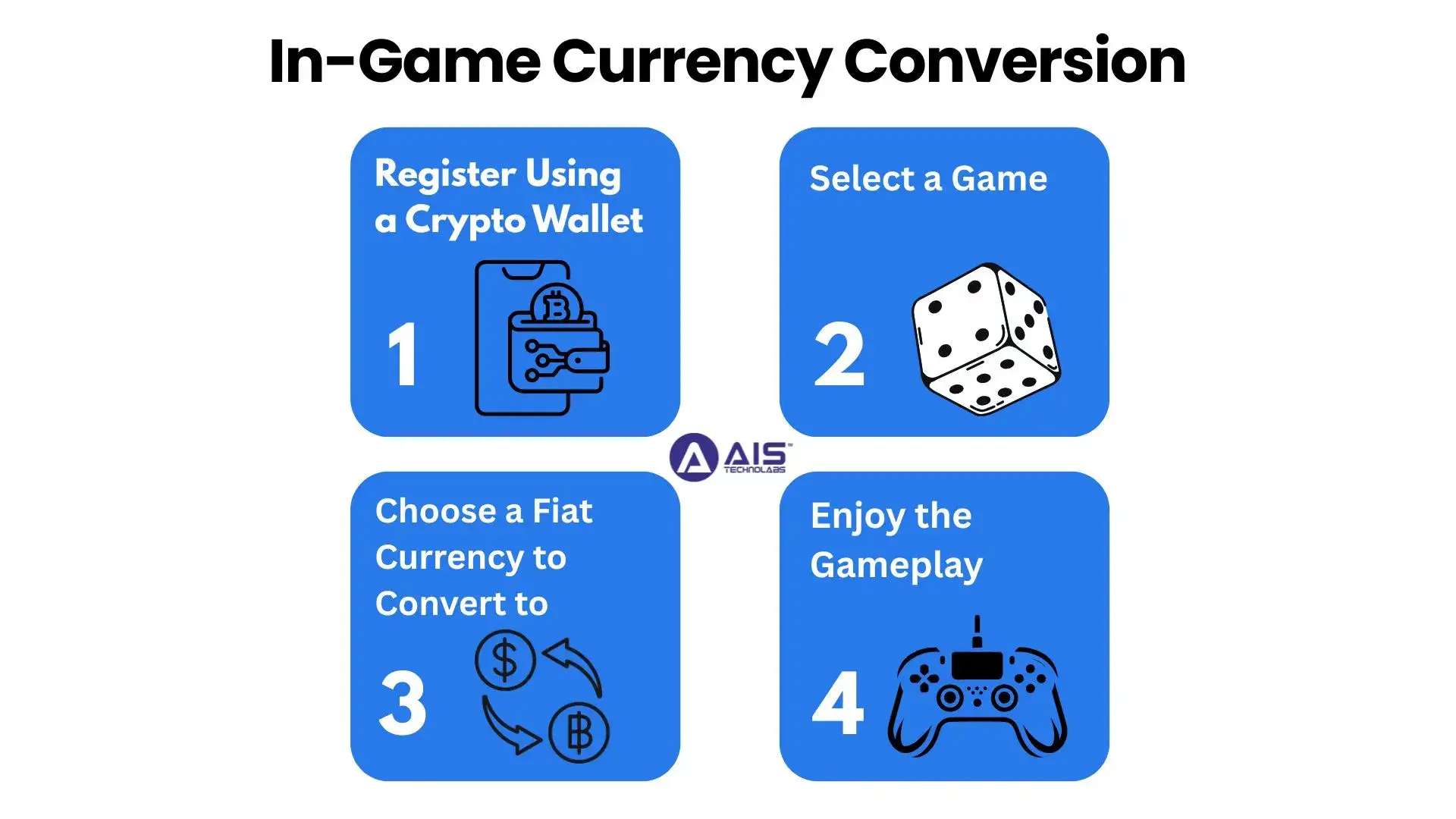
Players don't have to switch between wallets or payment methods thanks to this clever approach. Access to a wider audience and more player satisfaction will be beneficial to operators. In-game currency conversion helps iGaming businesses grow their player base while offering a consistent and easy-to-use gaming experience through allowing smooth gameplay across all titles.
Where Can Players Seek Help With Bitcoin Casino Complaints?
Given concerns about money laundering, regulators have been maintaining an eye on how digital currencies are employed in online gaming. In addition to serving as a reminder of the risks of using dependable or dishonest gambling sites, the extra focus tries to protect players as well.
Conflicts between players and a Bitcoin casino can be fairly and skillfully solved using the assistance of independent casino mediators. These mediators serve as impartial third parties with the goal of giving everyone concerned a secure, private, and fair resolution process.
Mediators are essential to upholding faith in the iGaming business, which has its own system of accountability. They make sure reputable casinos are not harmed by false claims while simultaneously safeguarding players from unfair advantages.
In addition to handling complaints, these organizations carry out thorough investigations, distribute current information on online casinos, and keep records and blacklists that help players in avoid dangerous sites. Their primary goal is to increase openness, compensate reliable operators, and reveal illegal conduct.
Major mediator sites like AskGamblers, ThePOGG, and Casinomeister are well known for encouraging fair play and driving the sector toward higher standards.
For a safer Bitcoin gambling experience, we at AIS Technolabs advise operators to adhere to open practices and players to use licensed, trustworthy platforms.
The Future of Cryptocurrency Gambling
In online gambling, cryptocurrencies are no longer a fad. A growing amount of gamers are drawn to Bitcoin casinos by features like quicker payments, more privacy, and less reliance on traditional banking. Operators run the risk of losing out on a very active and dedicated audience if they choose not to support cryptocurrency.
The sector for bitcoin gambling is expanding quickly; new platforms that accept a variety of digital currencies come out annually. Cryptocurrency-based gaming has moved from an optional add-on to an essential part of the iGaming business as player demand rises.
At the same time, it is expected that rules and laws pertaining to Bitcoin and other cryptocurrencies would quickly spread throughout the world. Casino operators are urged to adhere to the same compliance rules as fiat-based casinos in the areas they target in order to reduce legal risks.
An expert provider of bitcoin casino development services, AIS Technolabs offers operators expert guidance and assistance services that help them build secure, legal, and future-ready digital currency gaming platforms. To learn how our solutions can support your business goals, contact us today.
Disclaimer:
This blog is intended for informational and educational purposes only. We do not promote or facilitate gambling activities in any country where it is considered illegal. Our content is focused solely on providing knowledge about legal and regulated markets. We only work with operators and platforms that are licensed and comply with the laws of jurisdictions where casino gaming is permitted. We do not operate or endorse any form of gambling in restricted regions. In countries where only skill-based games are allowed, our involvement is strictly limited to those games.
We believe gambling should be an entertaining and responsible activity. Our goal is to ensure that the platforms we review uphold the highest standards of fairness, transparency, and player safety.
FAQs
Ans.
No, various parts have different laws regulating Bitcoin gaming. Many nations operate in a situation of legal ambiguity, while some prohibit it or allow it under regulated frameworks. It's always essential to study the state laws relating to gambling and cryptocurrencies.
Ans.
Yes, in a lot many cases. Even though Bitcoin payments can be made without banks, a gambling license boosts trust, protects customers, and enable casinos to operate freely in regulated markets. Jurisdictions like Curaçao have granted licenses to bitcoin casino.
Ans.
Laws pertaining to cryptocurrency keep evolving. It is challenging to carry out traditional gambling laws made for fiat money because many nations do not yet recognize Bitcoin as an authorized means of payment.
Ans.
While many licensed casinos continue to conduct identity checks in order to keep up with security and anti-money laundering (AML) rules, Bitcoin offers more secrecy than conventional methods of payment.
Ans.
To ensure legal and technical compliance, operators ought to conform to local gambling regulations, establish strict AML rules, obtain a valid gaming license, and work with experienced providers.

Mary Smith
Mary Smith excels in crafting technical and non-technical content, demonstrating precision and clarity. With careful attention to detail and a love for clear communication, she skillfully handles difficult topics, making them into interesting stories. Mary's versatility and expertise shine through her ability to produce compelling content across various domains, ensuring impactful storytelling that resonates with diverse audiences.
 ASIA PACIFIC