Table of Content
(503 views)
Published:February 16, 2026 at 10:41 am
Last Updated:12 May 2026 , 1:32 pm

Key Takeaways:
- Choosing a secure white-label casino provider is essential to protect player data, transactions, and sensitive information.
- Providers must comply with regulatory standards, KYC/AML requirements, and responsible gambling policies to operate legally.
- Fair play is guaranteed through certified RNG (Random Number Generator) systems and independent game audits.
- Regular security audits, SSL encryption, and anti-fraud measures maintain platform integrity and player trust.
- Transparent reporting and monitoring systems ensure that game outcomes are fair and verifiable.
- Top white-label providers offer ongoing updates and technical support to maintain both security and fairness over time.
- Prioritizing security and fair play improves player confidence, retention, and profitability for online casinos.
Introduction
Security and fair play are no longer optional features in online gambling. They are business-critical foundations. As the global iGaming market expands and regulations tighten, operators, investors, and regulators are paying closer attention to how White Label Casino Software platforms protect players, funds, and game integrity.
White label casino providers play a central role in this ecosystem. They design, maintain, and secure the technology that powers thousands of online casinos worldwide. This article explains—clearly and practically—how white label casino providers ensure security and fair play, what standards they follow, and how operators can verify those claims before launching.
Understanding Security & Fair Play in White Label Casinos

Security and fair play in white label casinos refer to the technical, legal, and operational safeguards that protect player data, financial transactions, and game outcomes. A secure platform prevents fraud and breaches, while fair play ensures that every game result is random, transparent, and unbiased across regions.
Strong security protects business continuity, regulatory approval, and brand reputation. Fair play builds long-term player trust and sustainable revenue. Weak controls, by contrast, expose operators to fines, payment bans, and irreversible loss of credibility.
What security means in online casino platforms
Security in online casino platforms covers data encryption, infrastructure protection, access control, and transaction safety. White label online casino software must secure player accounts, wallets, and game servers against internal misuse and external attacks.
It also includes monitoring systems that detect unusual activity, prevent unauthorized access, and maintain uptime during traffic spikes. Without enterprise-grade security, even a feature-rich casino software solution becomes a liability rather than an asset.
Why fair play is critical for player trust
Fair play ensures that players compete on equal terms and that game outcomes cannot be manipulated. Certified randomness, transparent payout ratios, and independent audits reassure players that results are genuine.
In competitive markets, trust directly impacts retention and lifetime value. Players abandon platforms quickly if they suspect unfair outcomes, regardless of bonuses or game variety.
Risks of poor security in white label solutions
Poor security exposes operators to data breaches, payment fraud, and regulatory penalties. It can lead to frozen funds, license suspension, and removal from payment networks.
From a business perspective, security failures increase churn, damage affiliate relationships, and reduce casino software ROI. These risks make provider selection a strategic decision, not just a technical one.
Role of White Label Casino Providers in Platform Security
White label casino providers are responsible for securing the core platform infrastructure. While operators manage branding and marketing, providers control the technology stack that processes bets, stores data, and runs games.
This shared responsibility model requires clear boundaries, standardized controls, and continuous oversight to ensure compliance across all operator instances.
Provider vs operator responsibilities
Providers handle infrastructure security, game logic, encryption, and compliance-ready architecture. Operators manage user access, customer support, and responsible gaming enforcement.
Clear separation ensures accountability. When responsibilities are unclear, gaps emerge that regulators and attackers can exploit.
Shared compliance and risk management
Security and compliance risks are shared across the ecosystem. Providers reduce risk by offering standardized tools, while operators reduce exposure by following best practices and regional requirements.
This collaboration allows a white label casino platform to scale across markets without rebuilding security frameworks for each launch.
How providers standardize security controls
Providers standardize authentication, encryption, monitoring, and update processes across all deployments. This consistency improves reliability and simplifies audits.
Standardization also allows faster response to new threats, ensuring every operator benefits from platform-wide improvements.
Licensing & Regulatory Compliance Requirements
Licensing is the legal backbone of security and fair play in online gambling. White label casino software providers typically design platforms to meet the requirements of regulated jurisdictions, enabling operators to apply for licenses faster and with fewer technical gaps.
Regulated jurisdictions enforce strict standards around player protection, anti-fraud controls, and game fairness. Popular gaming licenses require audited systems, secure payment flows, and transparent reporting. Compliance ensures fair operations by holding both providers and operators accountable, reducing risk for investors and increasing confidence among regulators and payment partners.
Importance of regulated jurisdictions
Operating under regulated jurisdictions ensures oversight, dispute resolution mechanisms, and enforceable standards. Regulators require secure systems, fair games, and responsible gaming tools.
Platforms built for regulated markets are inherently more resilient and trustworthy.
Popular gaming licenses and authorities
Common licensing authorities impose strict technical and operational requirements. These licenses demand audited systems, secure payment gateway integration, and documented compliance processes.
White label gambling software providers often pre-align their platforms with these standards to simplify operator licensing.
How compliance ensures fair operations
Compliance mandates RNG testing, transaction monitoring, and data protection. These requirements reduce manipulation, fraud, and unfair practices.
For operators, compliance translates into lower legal risk and greater acceptance by banks and payment providers.
Advanced Security Technologies Used by Providers
Modern white label casino providers use layered security architectures to protect platforms at scale. These technologies are embedded into the core system rather than added post-launch.
Layered defenses ensure resilience against both technical failures and malicious activity.
SSL encryption and data protection
SSL encryption secures data in transit between players, servers, and payment systems. Encrypted databases protect sensitive information at rest.
This prevents interception, tampering, and unauthorized access across the platform.
Secure payment processing systems
Payment gateway integration follows strict security and compliance standards. Transactions are monitored, logged, and encrypted to prevent fraud and chargebacks.
Reliable payment security is essential for maintaining player confidence and operational continuity.
DDoS protection and fraud prevention
DDoS protection ensures platform availability during traffic spikes or targeted attacks. Fraud prevention systems analyze behavior patterns in real time.
These tools protect both revenue and reputation, especially during peak betting periods.
Ensuring Fair Play Through Certified Game Mechanics
Fair play is enforced through verifiable systems, not promises. White label casino providers integrate games that undergo rigorous testing and certification.
These mechanisms ensure randomness, transparency, and consistent outcomes.
RNG (Random Number Generator) testing
RNG systems are tested to confirm that game results are statistically random and unpredictable. This prevents manipulation by operators or providers.
Certified RNGs are a core requirement for regulated operations.
Independent auditing agencies
Independent agencies audit game logic, payout ratios, and system integrity. Their reports provide objective proof of fairness.
These audits are often mandatory for licensing and payment approval.
Game fairness certifications
Fair play certification signals compliance with industry standards. It reassures players, affiliates, and regulators alike.
Certified games strengthen brand credibility and long-term trust.
Player Data Protection & Privacy Standards
Protecting player data is both a legal obligation and a trust requirement. White label casino software platforms handle personal, financial, and behavioral data at scale.
Providers implement privacy-first architectures to meet global standards.
GDPR and data privacy compliance
GDPR compliance ensures lawful data processing, transparency, and user rights. Even non-EU operators often adopt GDPR standards due to their global relevance.
Strong privacy controls reduce legal risk and improve player confidence.
Secure player account management
Player management systems use role-based access and activity logging. This prevents unauthorized changes and internal misuse.
Secure account management is critical for dispute resolution and fraud prevention.
Responsible handling of KYC data
KYC and AML integration ensures identity verification without exposing sensitive documents. Data is encrypted, segregated, and access-controlled.
This protects players while meeting regulatory requirements.
Anti-Fraud, AML & Responsible Gaming Measures
Anti-fraud and AML systems protect platforms from financial crime and reputational damage. White label casino providers integrate automated tools to monitor behavior and transactions.
These systems operate continuously and adapt to emerging threats.
AML policies and transaction monitoring
Transaction monitoring detects unusual patterns such as rapid withdrawals or suspicious deposits. Alerts enable timely investigation and intervention.
Strong AML controls are essential for banking relationships and licensing.
Player behavior analysis
Behavioral analytics identify risky or abnormal activity. This helps prevent fraud and supports responsible gaming enforcement.
Data-driven insights improve both security and player protection.
Responsible gaming tools and limits
Responsible gaming tools allow players to control spending and playtime. Limits, self-exclusion, and cooling-off periods reduce harm.
These tools are increasingly mandatory across jurisdictions.
Transparency, Audits & Ongoing Monitoring
Security and fair play require continuous effort. White label casino providers rely on audits, monitoring, and updates to maintain standards.
Ongoing oversight ensures platforms remain compliant and resilient.
Regular security audits
Security audits identify vulnerabilities and validate controls. Findings inform updates and improvements.
Audits demonstrate accountability to regulators and partners.
Fair play reporting systems
Fair play reports provide transparency into game performance and outcomes. They support dispute resolution and regulatory review.
Transparency builds trust with all stakeholders.
Continuous platform updates
Regular updates address new threats, regulatory changes, and performance issues. Updates are essential for long-term stability.
A static platform quickly becomes outdated and risky.
How Operators Can Verify a Provider’s Security Claims
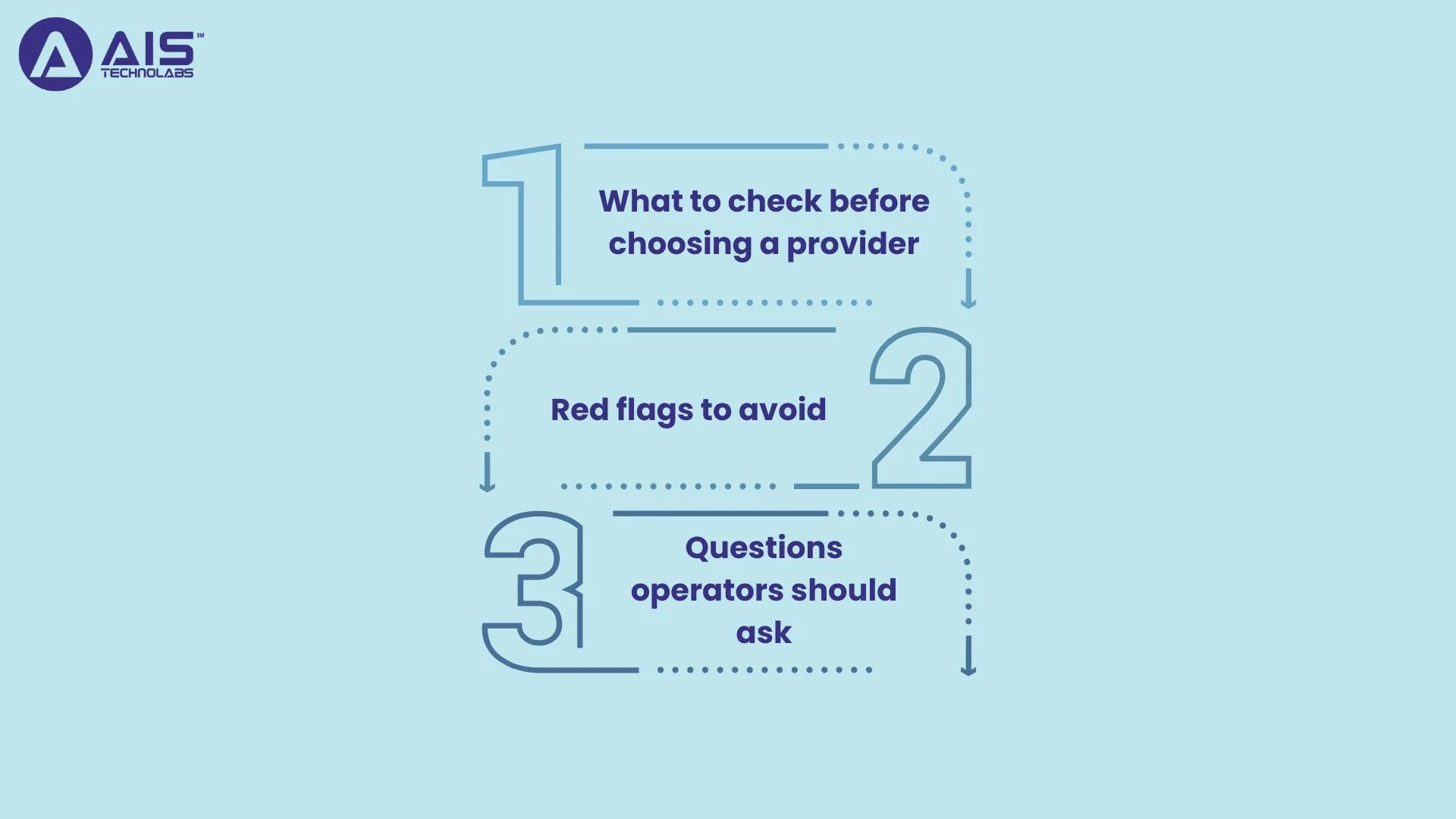
Operators must verify, not assume, provider security. Due diligence protects investment and reputation.
Asking the right questions reveals true platform maturity.
What to check before choosing a provider
Operators should review certifications, audit reports, and compliance documentation. Infrastructure details and update policies matter.
Verification reduces surprises post-launch.
Red flags to avoid
Vague security claims, missing audits, and unclear responsibility boundaries signal risk. Lack of transparency is a warning sign.
Operators should walk away from providers who cannot demonstrate compliance.
Questions operators should ask
Questions should cover data handling, incident response, licensing support, and monitoring capabilities. Clear answers indicate readiness.
Strong providers welcome scrutiny.
Final Thoughts: Building Trust with Secure White Label Casino Software
Security and fair play are long-term business strategies, not technical add-ons. A secure White Label Casino Software platform protects revenue, licenses, and brand equity.
In a competitive global iGaming market, trust becomes a differentiator. At AIS Technolabs, we believe sustainable success starts with secure, compliant, and transparent technology. If you’re planning to launch or scale responsibly, contact us to explore a compliance-first approach built for growth.
FAQs
Ans.
White label casino software is secure when built with encryption, audited RNGs, fraud prevention systems, and regulatory compliance baked into the platform architecture.
Ans.
The provider secures the core platform, while the operator manages user access, marketing, and responsible gaming enforcement.
Ans.
Fair play is ensured through certified RNG testing, independent audits, and compliance with regulated gaming authorities.
Ans.
Most providers design region-agnostic platforms that can be adapted to meet licensing and compliance requirements across jurisdictions.
Ans.
Yes, for many operators it offers faster launch, lower setup cost for online casino projects, and access to enterprise-grade security without custom development risk.

Mary Smith
Mary Smith excels in crafting technical and non-technical content, demonstrating precision and clarity. With careful attention to detail and a love for clear communication, she skillfully handles difficult topics, making them into interesting stories. Mary's versatility and expertise shine through her ability to produce compelling content across various domains, ensuring impactful storytelling that resonates with diverse audiences.
 ASIA PACIFIC