Table of Content
(505 views)
Published:May 26, 2026 at 6:43 am
Last Updated:9 Jun 2026 , 11:12 am
Key Takeaways
- The CRM solution will assist the iGaming company to deal with players and increase their engagement.
- In today’s times, technology allows for automation, analysis, and personalization.
- Effective retention strategies will minimize the churn rate and maximize the value of a player.
- Effective communication driven by data allows igaming companies to make the right offer at the right time.
- Tools that enable automation assist the process of managing campaigns and segmenting customers.
- Personalization makes player rewards more effective and improves engagement.
- Responsible igaming and compliance features become essential elements of modern CRMs.
Introduction
Over the last decade, there have been rapid changes in the world of iGaming due to technological innovations, mobile capabilities, and ever-changing player demands. In today's competitive market, online casinos, sports betting websites, poker platforms, and fantasy gaming providers face challenges in terms of maintaining loyal relationships with customers. Players can quickly leave the platform whenever they feel disconnected, unappreciated, or flooded with useless offers.
This intense competition has made CRM for iGaming one of the most important technological investments for operators seeking sustainable growth. A Customer Relationship Management system helps gaming businesses manage player data, automate communication, personalize promotions, and build stronger long-term relationships with users.
Unlike retail or eCommerce-oriented CRM applications, CRM software for iGaming providers focuses on addressing specific industry-related tasks such as monitoring player behavior, managing bonuses, offering game preferences, adhering to responsible gaming regulations, and real-time engagement tracking. In order to create valuable customer relations, operators use this type of solution to offer relevant communication.
Given the fact that customer acquisition prices keep increasing, operators pay particular attention to strategies focused on customer retention and engagement. In the contemporary iGaming landscape, businesses recognize that keeping existing users can be more affordable than constantly looking for new players. In addition, operators seek automation, segmentation, and personalization in their platforms.
The following guide examines the role of CRM platforms within the iGaming industry, including its characteristics, benefits, deployment, and application.
Understanding CRM in the iGaming Industry
Customer Relationship Management involves the techniques and tools companies employ for managing customer relations. Customer relationship management solutions within the realm of gambling are employed for collecting, analyzing, and organizing players' information to generate personalized customer experiences.
Gaming providers have to handle massive amounts of players' data such as deposits history, gambling habits, favorite games, play time, preferred devices, geographic location, and means of contact. Dealing with such large quantities of information manually becomes unmanageable at best.
This is where CRM for iGaming becomes essential. These platforms centralize customer data and allow operators to automate communication, create segmented campaigns, and monitor player activity in real time.
The end goal of employing such technology is enhancing users' engagement and maximizing players' life-time value.
Why CRM Matters in Modern Gaming Platforms
Modern gamblers do not just desire game access; they expect a smooth experience, relevant communication, personalization, and immediate assistance. Those operators who lack in providing such experiences typically suffer from high churn rates and low engagement levels.
Customer Relationship Management (CRM) enables operators to establish good relations by sending the right messages to their players at the proper time. This includes customized offers, alerts, loyalty benefits, tournament information, etc.
The role of iGaming Player Retention has become increasingly important as customer acquisition costs continue to rise across competitive gaming markets. Retaining loyal players improves profitability because existing users tend to spend more over time and require fewer marketing expenses compared to new customers.
Operators who implement retaining policies perform better in ensuring sustainable revenue growth and creating gaming communities.
Core Features of iGaming CRM Systems
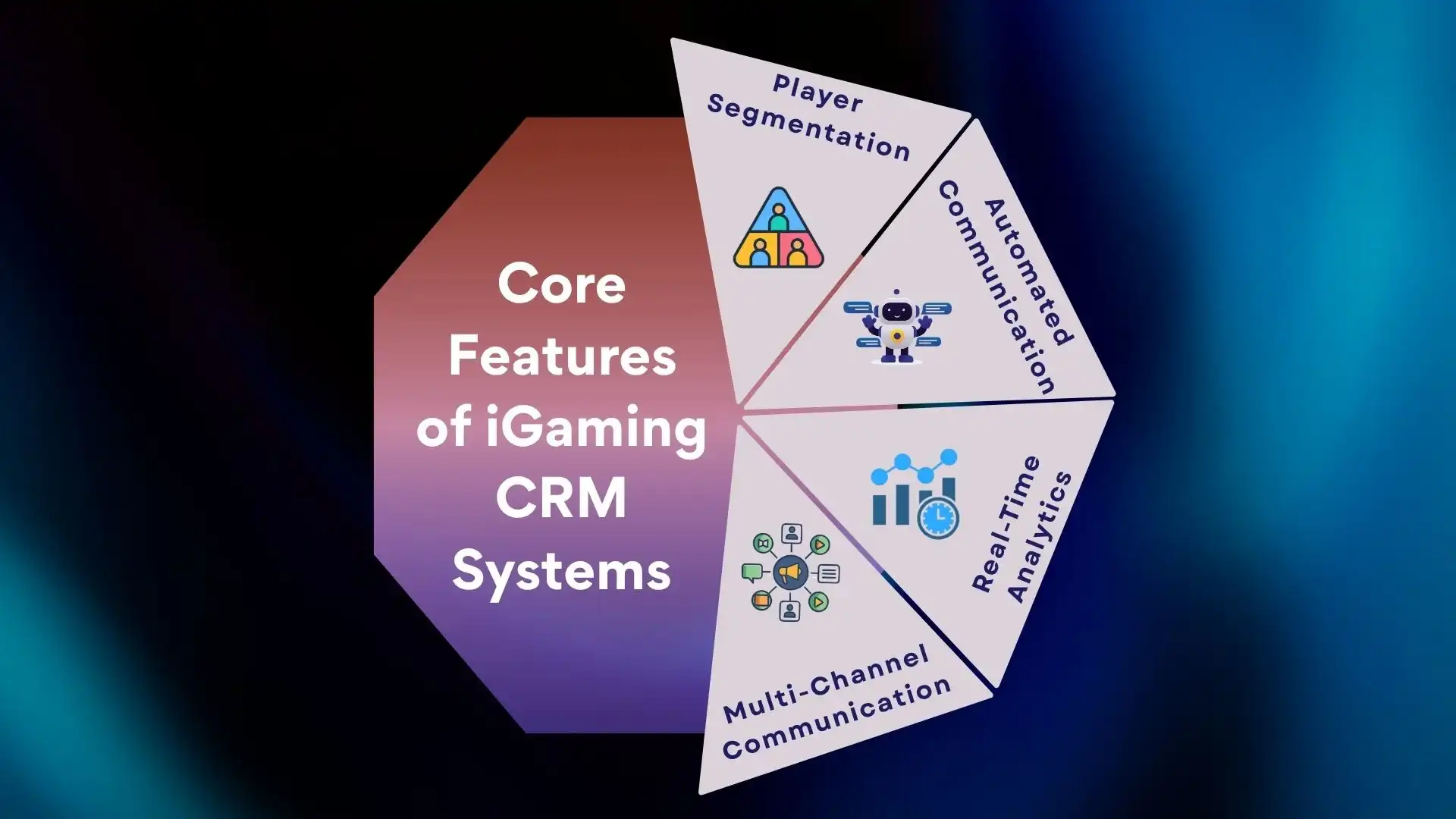
Modern CRM systems contain numerous tools and technologies tailored specifically for gaming enterprises.
Player Segmentation
Segmentation helps operators separate players into segments depending on their particular behavior or characteristics. Such segments might be
- High rollers
- Gamers who play casually
- Gamers who focus on sports betting
- Casino gamers
- Gamers who do not log in regularly
- VIP players
Segmentation lets the company run very focused marketing activities as opposed to mass communication with all the gamers.
Automated Communication
Automation allows platforms to trigger messages based on user behavior. For example:
- Welcome emails after registration
- Deposit reminders
- Birthday rewards
- Loyalty program notifications
- Reactivation campaigns
Automation reduces manual workload while improving consistency and response times.
Real-Time Analytics
CRM systems provide real-time insights into player behavior and campaign performance. Operators can track metrics such as:
- Session duration
- Deposit frequency
- Retention rates
- Bonus usage
- Conversion rates
- Revenue trends
These insights help businesses optimize campaigns and improve operational decisions.
Multi-Channel Communication
Modern systems support communication through multiple channels, including:
- SMS
- Push notifications
- In-app messaging
- Live chat
This ensures players receive information through their preferred communication methods.
The Growing Importance of Personalization
Personalization has become one of the most influential factors in customer satisfaction. Generic promotions are often ignored because they fail to match individual interests.
Advanced CRM platforms analyze user behavior and preferences to create customized experiences. A sports bettor may receive updates related to upcoming matches, while a casino player might receive free spin promotions tailored to their favorite games.
The success of many iGaming Marketing Strategies now depends heavily on personalized engagement. Businesses that understand player behavior can create campaigns that feel relevant and valuable rather than intrusive.
Personalization not only increases engagement but also strengthens trust between the platform and the player.
Benefits of CRM Systems for iGaming Operators
Improved Customer Engagement
Consistent and relevant communication keeps players active on the platform. Personalized rewards and timely notifications increase interaction and satisfaction.
Higher Revenue Generation
CRM systems help identify high-value players and encourage repeat deposits through targeted promotions and loyalty rewards.
Better Decision-Making
Analytics tools provide insights that help operators understand player behavior and market trends.
Enhanced Operational Efficiency
Automation reduces repetitive tasks and allows marketing teams to focus on strategy and optimization.
Stronger Brand Loyalty
Players who feel valued are more likely to remain loyal to a platform over the long term.
The ability to build loyalty is one of the main reasons businesses invest in CRM for iGaming platforms.
CRM and Responsible Gaming
Responsible gaming has become a major focus within regulated markets worldwide. Operators are expected to monitor player behavior and identify signs of problematic gambling activity.
Modern CRM systems include responsible gaming features such as:
- Deposit limit monitoring
- Session tracking
- Behavioral alerts
- Self-exclusion management
- Cooling-off period notifications
These tools help operators comply with regulations while promoting safer gaming environments.
Responsible gaming initiatives also improve trust and brand reputation among users and regulators.
How Automation Transforms Player Communication
Automation has transformed how gaming platforms interact with players. Instead of relying on manual campaign management, operators can now automate large portions of customer communication.
Advanced crm marketing automation tools enable businesses to trigger campaigns based on real-time player behavior. For example, a platform may automatically send free spins to a user who has not logged in for several days.
Automation also improves consistency and ensures players receive timely messages without delays.
Benefits of automation include:
- Faster campaign execution
- Reduced human error
- Improved engagement timing
- Increased scalability
- Better campaign tracking
As gaming databases grow, automation becomes increasingly necessary for maintaining efficient operations.
Data Analytics and Predictive Insights
Data plays a central role in modern CRM strategies. Gaming platforms generate enormous amounts of behavioral data that can be analyzed to identify patterns and trends.
Predictive analytics helps operators forecast player behavior and proactively respond to potential issues such as churn risk.
For example, if analytics indicate declining engagement from a high-value user, the platform may automatically trigger personalized incentives to encourage continued activity.
This proactive approach significantly improves customer relationship management and business performance.
The integration of predictive analytics has become a defining feature of advanced CRM for iGaming systems.
Building Effective Loyalty Programs
Loyalty programs are one of the most effective ways to encourage long-term engagement.
Successful loyalty systems often include:
- Reward points
- VIP tiers
- Cashback programs
- Exclusive tournaments
- Personalized bonuses
- Birthday rewards
These incentives motivate players to remain active while strengthening emotional connections with the platform.
The success of loyalty initiatives is closely linked to iGaming Player Retention, as engaged users are more likely to continue playing regularly.
Operators that continuously improve loyalty experiences often achieve stronger customer satisfaction and reduced churn.
Omnichannel Communication in iGaming
Players interact with gaming platforms across multiple devices and communication channels. A user may register through mobile, place bets on desktop, and receive updates through email or push notifications.
CRM systems help operators maintain consistent communication across all these channels.
Omnichannel engagement ensures that users receive seamless experiences regardless of how they interact with the platform.
Benefits include:
- Better customer experience
- Improved campaign consistency
- Increased engagement opportunities
- Higher conversion rates
Consistent messaging also strengthens brand recognition and trust.
Challenges in CRM Implementation
Despite the many advantages of CRM systems, implementing them successfully within the iGaming industry can be challenging. Gaming operators manage large volumes of player data, multiple software platforms, and real-time customer interactions, all while operating under strict regulatory requirements. Without proper planning and execution, CRM implementation can lead to inefficiencies, compliance risks, and reduced campaign performance. Businesses must therefore understand these challenges to ensure smoother adoption and better long-term results.
Data Integration Issues
One of the most common challenges involves integrating various software systems into a centralized CRM platform. Gaming operators often use separate systems for payment processing, game management, analytics, customer support, affiliate tracking, and fraud detection. These platforms may not always communicate effectively with one another.
When systems fail to integrate properly, businesses may experience inconsistent or outdated customer data. This can affect reporting accuracy and reduce the effectiveness of marketing campaigns. For example, a player who recently made a deposit may still receive inactivity promotions due to delayed data synchronization.
To avoid such issues, operators should select CRM platforms that support flexible APIs, third-party integrations, and scalable infrastructure. Proper testing and phased implementation can also help reduce disruptions during deployment.
Compliance Requirements
The iGaming industry operates under strict regulations that vary across countries and jurisdictions. Different regions have unique requirements related to player privacy, promotional messaging, responsible gaming, and financial transactions.
CRM systems must comply with these regulations to avoid legal complications and financial penalties. Businesses may need to manage user consent, data storage limitations, communication restrictions, and self-exclusion processes depending on the market they operate in.
Keeping up with changing regulations can be difficult, especially for global operators serving multiple regions. Businesses should therefore invest in CRM systems that include compliance monitoring tools and customizable regulatory settings.
Player Privacy Concerns
Gaming platforms collect large amounts of sensitive player information, including financial records, gaming history, location data, and communication activity. Because of this, maintaining strong data security and transparency is extremely important.
Players expect their personal information to be handled responsibly and securely. A data breach or misuse of customer information can damage trust and negatively impact a platform’s reputation. Operators must implement secure authentication systems, encrypted databases, regular security audits, and clear privacy policies to protect user data.
Transparency also plays a major role in customer confidence. Businesses should clearly explain how player data is collected, stored, and used within their systems.
Complex Segmentation
Segmentation is one of the most valuable CRM capabilities, but it can also become difficult to manage as player databases grow. Gaming platforms serve diverse audiences with different interests, playing habits, and spending behaviors.
Creating meaningful audience segments requires accurate, organized, and continuously updated data. Poor segmentation may lead to irrelevant communication that reduces engagement and campaign performance. Operators must regularly analyze player behavior and refine segmentation strategies to ensure marketing efforts remain personalized and effective.
Resource Allocation
CRM implementation requires significant investment in technology, staff training, and strategic planning. Many businesses underestimate the resources needed to fully utilize CRM capabilities. Successful implementation often involves marketing teams, technical specialists, analysts, and ongoing campaign optimization efforts.
Businesses that allocate resources effectively and plan implementation carefully can maximize the long-term value of their CRM investments while improving customer engagement and operational efficiency.
AI and Machine Learning in CRM
Artificial Intelligence and machine learning technologies are reshaping customer relationship management across industries.
AI-powered systems can:
- Predict player behavior
- Recommend personalized promotions
- Detect fraud patterns
- Improve customer support
- Optimize campaign timing
Machine learning algorithms continuously analyze data to improve campaign effectiveness and personalization accuracy.
The growing use of AI is transforming how operators approach iGaming Marketing Strategies in competitive markets.
Platforms that adopt intelligent automation gain significant advantages in engagement and operational efficiency.
Mobile CRM Optimization
Mobile gaming now represents a major share of the global iGaming market. Players expect seamless experiences on smartphones and tablets.
CRM systems must therefore support mobile-first engagement strategies, including:
- Mobile push notifications
- Responsive communication templates
- App-based loyalty rewards
- Real-time mobile messaging
Optimizing for mobile improves accessibility and increases engagement opportunities throughout the player journey.
CRM Metrics That Matter
Operators use various metrics to measure CRM performance.
Customer Lifetime Value (CLV)
Measures the total revenue generated by a player over time.
Churn Rate
Tracks the percentage of players who stop using the platform.
Retention Rate
Measures how effectively the platform retains users.
Average Revenue Per User (ARPU)
Calculates the average revenue generated per player.
Campaign Conversion Rate
Measures how many users respond to marketing campaigns.
These metrics help operators optimize engagement strategies and improve profitability.
Best Practices for CRM Success
Focus on Data Quality
Accurate data improves segmentation and personalization.
Prioritize User Experience
Communication should feel relevant and non-intrusive.
Test Campaign Performance
Regular testing helps identify the most effective engagement strategies.
Use Automation Strategically
Automation should enhance relationships rather than overwhelm users.
Monitor Regulatory Changes
Compliance is critical in regulated gaming markets.
Operators that continuously refine their strategies often achieve stronger results with CRM for iGaming solutions.
The Future of CRM in the iGaming Industry
The future of CRM technology will likely focus on deeper personalization, AI-driven analytics, and immersive engagement experiences.
Emerging technologies may include:
- Voice-based communication
- Advanced behavioral prediction
- Real-time adaptive promotions
- Blockchain-based loyalty systems
- Enhanced responsible gaming monitoring
As competition increases, operators will continue investing in technologies that improve customer relationships and long-term profitability.
The evolution of crm marketing automation will also play a major role in helping platforms scale personalized communication efficiently.
Automation combined with intelligent analytics is expected to define the next generation of gaming engagement strategies.
Choosing the Right CRM Platform
Selecting the right CRM system depends on several factors:
- Business size
- Target audience
- Regulatory requirements
- Integration capabilities
- Scalability
- Budget
- Automation features
Operators should evaluate whether the platform supports real-time analytics, omnichannel communication, and advanced segmentation capabilities.
Scalable platforms are especially important for businesses planning long-term growth.The right solution can significantly improve operational efficiency and customer satisfaction.
Retention Strategies Beyond Bonuses
Many operators rely heavily on bonuses, but sustainable engagement requires broader strategies.
Effective retention approaches include:
- Community building
- Personalized experiences
- Gamification
- Faster customer support
- Exclusive content
- Educational resources
Long-term success in iGaming Player Retention often comes from creating enjoyable and trustworthy experiences rather than relying solely on promotional incentives.
Players are more likely to remain loyal when they feel connected to the platform and its community.
The Role of CRM in Revenue Growth
CRM systems directly influence revenue generation by improving player engagement and reducing churn.
When users receive personalized offers and meaningful communication, they are more likely to remain active and make repeat deposits.
Data-driven decision-making also improves marketing efficiency and reduces wasted advertising spend.
This is why many leading operators consider CRM for iGaming a core component of business growth strategies.
Platforms that successfully combine analytics, personalization, and automation often achieve stronger financial performance over time.
Conclusion
The iGaming industry continues to become more competitive, making customer engagement and retention more important than ever. CRM systems help operators manage player relationships, automate communication, analyze behavior, and create personalized experiences that improve long-term loyalty.
From segmentation and analytics to automation and responsible gaming tools, modern CRM platforms provide essential capabilities for sustainable business growth. Operators that invest in intelligent engagement strategies are better positioned to improve player satisfaction, increase retention, and optimize revenue performance.
As technology continues evolving, CRM systems will become even more advanced through AI, predictive analytics, and deeper personalization. Businesses that adapt early will have a stronger advantage in attracting and retaining players in competitive gaming markets.
AIS Technolabs provides CRM development and iGaming software solutions designed to support engagement, automation, and player management for modern gaming businesses.
FAQs
Ans.
CRM in iGaming refers to software and strategies used to manage player relationships, automate communication, analyze behavior, and improve customer engagement.
Ans.
CRM systems help operators improve retention, personalize communication, increase player satisfaction, and optimize marketing performance.
Ans.
Automation enables operators to send timely and relevant messages based on player behavior, improving communication efficiency and engagement rates.
Ans.
Key features include segmentation, analytics, automation, omnichannel communication, loyalty management, and responsible gaming tools.
Ans.
CRM systems can monitor player behavior, identify risky patterns, and provide tools for deposit limits, self-exclusion, and activity tracking.
Ans.
Player segmentation divides users into groups based on behavior, preferences, or activity levels to create more targeted campaigns.
Ans.
Personalized communication, loyalty rewards, and proactive engagement strategies encourage players to remain active on the platform.
Ans.
AI helps predict player behavior, optimize campaigns, personalize recommendations, and improve operational efficiency.
Ans.
Mobile optimization ensures seamless communication and engagement across smartphones and tablets, improving accessibility and user experience.
Ans.
Yes, CRM systems help businesses of all sizes improve customer relationships, automate marketing efforts, and enhance operational efficiency.

Mary Smith
Mary Smith excels in crafting technical and non-technical content, demonstrating precision and clarity. With careful attention to detail and a love for clear communication, she skillfully handles difficult topics, making them into interesting stories. Mary's versatility and expertise shine through her ability to produce compelling content across various domains, ensuring impactful storytelling that resonates with diverse audiences.
 ASIA PACIFIC