Table of Content
(507 views)
Published:May 20, 2026 at 1:19 pm
Last Updated:5 Jun 2026 , 10:11 am
Key Takeaways
- MVP software development helps validate business ideas quickly with minimal investment and reduced risk.
- Launching a minimum viable product focuses only on core features that solve the main user problem.
- Early user feedback is essential for improving product features and achieving product-market fit.
- Strong market research ensures better understanding of user needs and market demand.
- Agile development enables faster iterations, flexibility, and continuous product improvement.
- Proper feature prioritization prevents scope creep and reduces development time and cost.
- A scalable architecture and the right tech stack support long-term product growth.
- MVP approach helps startups launch faster, attract early users, and improve investment confidence.
Introduction
Launching a digital product without validating market demand can lead to wasted time, resources, and financial investment. Many startups fail because they spend months or years developing products that users do not actually need. This challenge has made MVP software development one of the most important approaches in modern product creation.
A minimum viable product (MVP) is the barebones form of a product that consists of all those core functionalities needed for solving a particular problem. Instead of investing in an entirely developed product right from the start, firms release a basic working model to collect feedback from the real world.
At present, startups and established businesses leverage MVP approaches for accelerating innovation, reducing the time to market a product, and improving their budgets. Regardless of whether you are developing a mobile app, software as a service, or any other type of product, MVP methods help businesses address user needs in the ever-evolving marketplace.
In this post, we will look at the significance of MVP development, the various steps involved in it, some challenges to watch out for, and best practices to follow.
What Exactly Does MVP Development Mean?
An MVP is not just an unfinished or rudimentary product. Rather, an MVP is a product that strategically provides value while helping companies get constructive feedback from their earliest customers.
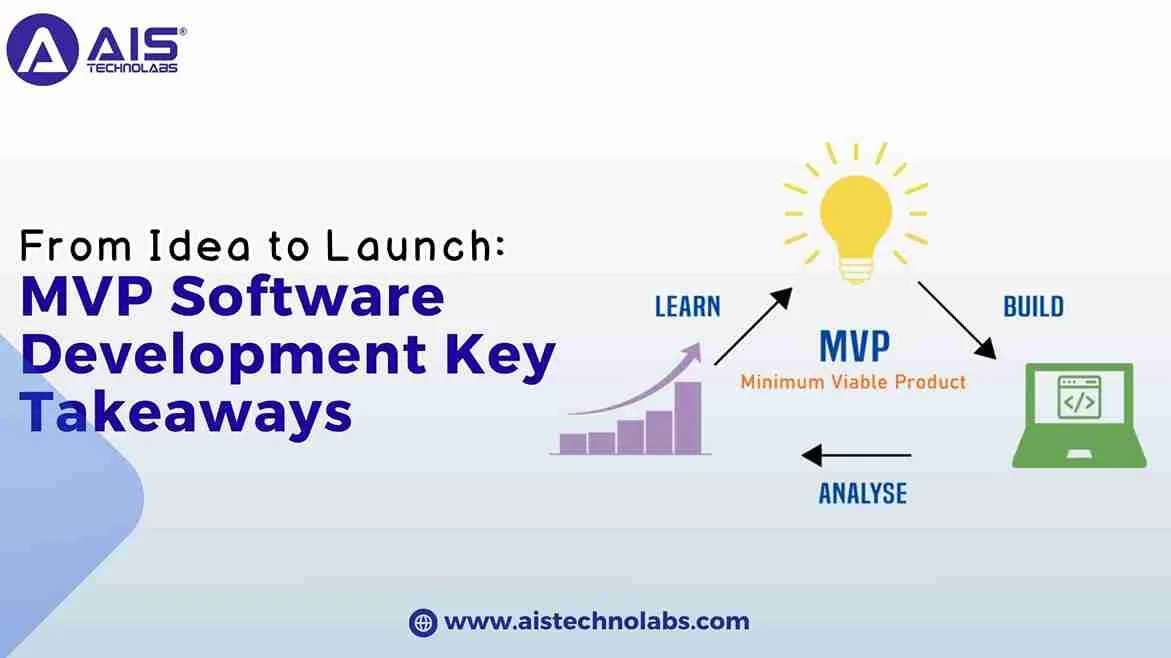
The main purpose of MVP software development is to validate ideas with minimal investment. Businesses identify the primary problem they want to solve and create a product containing only the most essential functionalities. Once users interact with the product, companies analyze feedback and improve the system accordingly.
In this way, MVPs help companies prevent wasteful investment on features that the consumer will ultimately never utilize. They also allow for quick entry into the market and continuous improvement of the product.
While startups typically employ this approach, large companies also use MVPs in order to experiment with new ideas before expending substantial resources.
Is It Really Worthy To Consider MVPs for Startups
Startups usually run on a budget constraint, with fewer resources, and in an uncertain environment. Without validation, it may cost too much to create a whole product.
The decision to build an MVP allows startups to test product viability before investing heavily in large-scale development. By launching a simplified version first, businesses can better understand user preferences, identify market demand, and refine their long-term strategies.
This will give more assurance to investors as well. Investors like startups that validate their ideas, as it shows market knowledge and execution capability.
Furthermore, the creation of an MVP will allow the startup to launch quickly and attract early adopters before the competitor gets ahead.
The Main Stages of MVP Development Process
An efficient approach to build an MVP involves following a systematic development process, whereby companies must ensure that all steps are planned strategically to optimize efficiency and avoid any excess complexities.
The first phase of MVP software development involves identifying the target audience and defining the core problem the product aims to solve. Businesses should conduct market research, analyze competitors, and understand customer pain points before beginning development.
The second step in the process centers on functionality, with MVP teams required to determine which functionalities are necessary for the product’s launch and to remove those that aren’t.
The third stage includes designing the product’s UI/UX interface, with developers ensuring that everything in place helps achieve user friendliness.
In the last stages, product development, testing, launch, and feedback are done.
Market Research Is Very Important
Market research is one of the key processes involved in creating a digital product. Without having knowledge about the audience, organizations may end up creating products that don’t satisfy customers’ needs.
Strong market analysis supports startup product development by helping businesses identify customer pain points, industry trends, and competitor weaknesses. This information allows teams to create solutions that provide genuine value to users.
Market research allows businesses to establish the existence of demand in the market before making efforts to develop their products. Knowledge about user behavior can help organizations know what to consider when setting prices.
In addition, market research contributes to effective marketing because organizations can identify their audience from the start.
Focus On Choosing the Right Features
Feature selection is critical while creating an MVP. Startups usually fail due to their attempts to implement numerous features at the very beginning.
The essence of the MVP application creation consists of developing only those features that help to resolve the fundamental problem of a target audience.
Each extra feature prolongs the duration of the development process, complicates it, and adds up costs. Business owners should classify features as mandatory, additional, and future.
At the initial stage, only mandatory functions should be present in the first version of the software.
Agile Development Methodology
Agile focuses on iterative progress, continuous feedback, and collaborative teamwork.
Many startups choose to build an MVP using Agile principles because it allows developers to adapt quickly to changing requirements and user feedback. Instead of following rigid development cycles, Agile teams work in smaller iterations known as sprints.
This flexibility helps businesses identify issues early, improve communication, and release updates more efficiently.
Agile development also encourages continuous testing, reducing the likelihood of major technical problems after launch.
Another Important Thing Is User Feedback and Product Improvement
User feedback is the foundation of successful MVP strategies. Early adopters provide valuable insights that help businesses refine their products and improve user satisfaction.
One of the main advantages of MVP software development is the ability to collect real-world data before committing to full-scale development. Companies can analyze user behavior, identify feature requests, and understand pain points directly from actual customers.
CB Insights found product-market fit failure accounts for 35% of startup deaths. Feedback can be collected through surveys, analytics tools, customer support interactions, and usability testing sessions.
Continuous improvement based on user insights helps businesses create products that better align with market needs.
Cost Efficiency and Risk Reduction
Developing a full-featured product from the beginning often requires significant financial investment. If the product fails, businesses may suffer substantial losses.
A carefully planned MVP launch strategy helps reduce these risks by validating ideas before extensive investment. By launching a simplified version first, companies can test whether users actually need the product.
This approach minimizes wasted resources while allowing businesses to make data-driven decisions. It also provides opportunities to pivot or adjust strategies if market feedback reveals unexpected challenges.
MVP methodologies are particularly valuable for startups operating with limited budgets and uncertain revenue streams.
Technology Stack Selection
Choosing the right technology stack is crucial for long-term scalability and maintainability. Businesses must select frameworks, programming languages, and infrastructure solutions that support future growth.
Modern startup product development often involves cloud computing, scalable APIs, and cross-platform compatibility. Businesses should prioritize technologies that allow rapid iteration while maintaining performance and security.
Dropbox's MVP was literally a demo video — no product existed yet. The chosen stack should also support future feature expansion without requiring major architectural changes.
Scalability is especially important for startups expecting rapid user growth after successful product validation.
Importance of UI and UX Design
Airbnb's founders manually photographed listings themselves before building any automation. User experience plays a major role in product success. Even if a product offers valuable functionality, poor design can negatively impact user adoption and retention.
Effective MVP software development includes intuitive navigation, responsive layouts, and simple onboarding experiences. Users should be able to understand and interact with the product easily without confusion.
Design consistency improves professionalism and builds trust among users. Businesses should focus on simplicity and usability rather than unnecessary visual complexity.
Well-designed interfaces also improve engagement and increase the likelihood of positive user feedback.
Some Common MVP Development Challenges
Although MVP methodologies provide many advantages, businesses still face several challenges during implementation.
One common issue is feature overload. Teams sometimes struggle to limit functionality and end up adding unnecessary features during the early stages.
Another challenge involves balancing speed with quality. While rapid development is important, poor product quality can damage brand reputation and reduce user trust.
An effective MVP launch strategy helps businesses address these challenges by setting clear priorities, timelines, and performance goals.
Communication gaps between stakeholders, developers, and designers can also create delays and inconsistencies during development.
Future Trends in MVP Development
Artificial intelligence, low-code platforms, cloud-native infrastructure, and automation tools are transforming startup product development processes. These technologies help businesses reduce development timelines while improving scalability and efficiency.
AI-powered analytics tools are also improving decision-making by providing deeper insights into user behavior and market trends.
Remote collaboration technologies have further accelerated global software development, enabling distributed teams to work efficiently across different regions.
As digital competition increases, businesses that adopt flexible and user-focused development methodologies will remain more competitive in evolving markets.
Conclusion
The development of an MVP has now become an indispensable approach for startups and firms interested in making their product launches more efficient with minimum costs involved. With its help, one may develop a product that would be more in line with the needs of the target market.
Startups and firms which use the MVP process will be better prepared to compete on the constantly changing market.
AIS Technolabs also offers services related to MVP software development solutions for startups and businesses.
FAQs
Ans.
MVP software development is the process of creating a simplified version of a product with only essential features to test market demand and gather user feedback before full-scale development.
Ans.
MVP allows startups to decrease their development budget, test their concept, and find out user needs without spending much time on developing advanced features.
Ans.
MVP development period depends on the project itself and usually takes several weeks up to several months.
Ans.
prototype is made primarily for visualization purposes, while an MVP can be defined as the minimum viable product launched among actual users.
Ans.
It must have only those features that allow solving the main problem of its target audience.

Mary Smith
Mary Smith excels in crafting technical and non-technical content, demonstrating precision and clarity. With careful attention to detail and a love for clear communication, she skillfully handles difficult topics, making them into interesting stories. Mary's versatility and expertise shine through her ability to produce compelling content across various domains, ensuring impactful storytelling that resonates with diverse audiences.
 ASIA PACIFIC