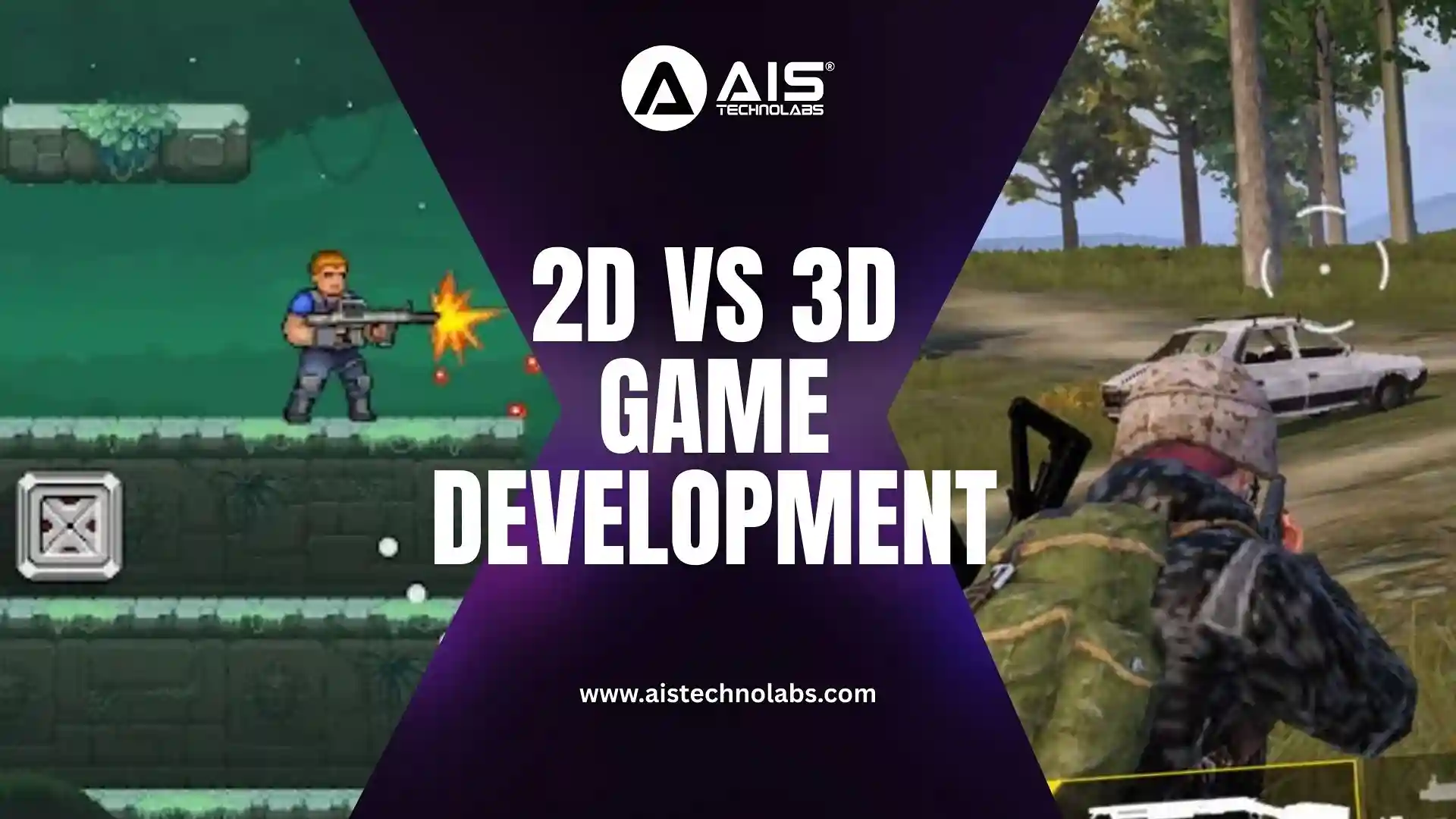
2D vs 3D Game Development: Which One Should You Learn First?

Home/Blog/Game Development/2D vs 3D Game Development: Which One Should You Learn First?

Table of Content

(517 views)

Introduction

Starting game development is exciting. It is also confusing. Beginners often struggle with the first decision. Should you build 2D games or move straight to 3D? The debate around 2d vs 3d game development appears early in the learning journey. Tutorials give mixed advice. Social media shows polished results. Reality feels different.

This decision affects learning speed. It affects tools. It affects motivation. Choosing the wrong starting point can slow progress. Choosing the right one builds confidence. This guide breaks the choice down in simple terms.

What Is 2D Game Development?

2D game development works on a flat surface. There is no real depth. Movement happens on two axes.
  • Left and right.
  • Up and down.
Most 2d games use sprites. These are flat images. Animation comes from switching frames. Levels are built using grids or tiles.
Examples include:
  • Platform games
  • Puzzle games
  • Card games
  • Arcade-style games
2D games focus on gameplay. Controls matter more than visuals. Feedback must feel right. This simplicity helps beginners understand how games work. It also helps them learn game development easily.

What Is 3D Game Development?

3D game development creates depth. Objects exist in space. Cameras move freely. Characters move: 
  • forward and backward.
  • Up and down.
  • Side to side.
Games use 3D models instead of sprites. Lighting affects mood. Physics affects motion.
Common 3D genres include:
  • Action games
  • Simulation games
  • Exploration games
  • First-person games
3D development offers immersion. It also adds layers of complexity.

Core Differences Between 2D vs 3D Game Development

The difference between 2d and 3d game development is not only visual.

2D games are easier to plan

3D games require spatial thinking

2D assets are faster to create

3D assets take more time.

2D bugs are easier to spot

3D bugs can hide in physics or camera logic.

2D projects move fast. 

3D projects move more slowly. 


These differences matter when learning.

Learning Experience for Beginners

A game dev beginner needs to progress early. Finishing something matters. 2D development gives quick results. You write code. You see movement. You fix issues fast. 
Whereas, 3D development delays rewards. Before gameplay, you set up cameras. You adjust the lighting. You configure physics. Many beginners lose motivation here. This is why most guides suggest starting with 2D when you want to learn game development properly.

Common Beginner Struggles

In 2D Development

  • Collision issues
  • Animation timing
  • Level balance
These are easy to debug. You see the issue clearly.

In 3D Development

  • Camera control
  • Physics glitches
  • Depth confusion
These issues take longer to understand. This difference affects learning speed.

Tools & Learning Resources for 2D vs 3D Game Development

Most engines support both styles. The experience still differs. Well, a Unity 3d developer can easily build games in both 2d and 3d mode. Although surely the components and features are pretty much different in both approaches.

2D Tools

  • Sprite editors
  • Tile map editors
  • Simple animation tools
These tools are lightweight. Beginners learn them fast.

3D Tools

  • Model editors
  • Material tools
  • Lighting systems
These tools are powerful. They take time to learn. Tool overload is common in 3D projects.

Development Time and Effort

2D games are faster to complete. Even small projects feel finished and playable. This helps developers stay focused and motivated. 3D games take more time. Simple ideas often turn into large tasks. Asset creation, testing, and tuning add extra effort.
For solo developers, this difference matters. For small teams, it matters even more. That is why indie game dev projects often begin with 2D.

Pros & Cons Table: 2D vs 3D Game Development

Here are the pros and cons of 2D vs 3D game development:

Factor

2D Games

3D Games

Beginner friendly

Yes

No

Learning speed

Fast

Slow

Asset creation

Simple

Complex

Debugging

Easier

Harder

Performance needs

Low

High

Team size

Solo or small

Medium or large

Project scope

Small to medium

Medium to large

Indie suitability

Very high

Limited

Visual depth

Basic

High

Need Guidance on Where to Start?

Confused about 2d vs 3d game development? Talk to AIS Technolabs for clear direction and practical learning paths.

When to Choose 2D Over 3D – Indie Game Dev?

For indie game dev, 2D is practical.
Reasons include:
  • Shorter build time
  • Lower cost
  • Easier testing
  • Faster release cycles
Many successful indie games are 2D. This is not accidental. 2D allows experimentation. You can fail fast. You can learn fast.

When to Choose 3D Over 2D?

3D fits specific goals.
Choose 3D if:
  • Immersion is the core feature
  • World exploration matters
  • You plan long development cycles
  • You have a strong technical interest
However, if 3D is a mandatory thing for your project vision but you lack the relevant experience, you can consider choosing to hire game developer professionals who can guide you with the technical implementation while you focus on design and direction. 3D development requires patience, although it’s not really beginner-friendly, but no doubt, it’s powerful.

Career and Skill Growth

Starting with 2D does not limit careers.
2D teaches:
  • Game loops
  • Input handling
  • Player feedback
  • Level design
These skills transfer well. Many developers move from 2D to 3D later. The transition becomes smoother.

Practical Learning Path

A simple path works best.
  1. Start with small 2D games
  2. Finish simple projects
  3. Learn mechanics and feedback
  4. Improve design skills
  5. Move to 3D when ready
This path avoids burnout.

Real-World Development Scenarios

  • A solo developer builds a 2D puzzle game. It ships in months.
  • A small team builds a 2D platformer. They gather feedback early.
  • A studio builds a 3D simulation. Development takes years.
Many teams also prioritize professional game development services for specific phases such as prototyping, optimization, or porting. Aligning with current Mobile Game Development Trends, this approach allows studios to focus on their core strengths while leveraging specialized expertise—ensuring each development path fits its unique project goals.

Conclusion

The choice between 2d vs 3d game development is not about talent. It is about timing. 2D helps beginners move forward. It builds confidence. It leads to finished games. 3D offers depth and realism. It demands patience and planning.
At AIS Technolabs, teams guide developers based on skill level and project goals. The focus stays on learning fundamentals first and choosing the right path at the right time. Start simple. Build something real. Grow from there.

FAQs

Ans.
No. Many modern games are 2D.

Ans.
Usually no. 2D is easier.

Ans.
Yes. Many developers do.

Ans.
Yes. It saves time and cost for indie game development.

Ans.
No. Core skills transfer well.
Harry Walsh
Harry Walsh

Technical Innovator

Harry Walsh, a dynamic technical innovator with four years of experience, thrives on pushing the boundaries of technology. His passion for innovation drives him to explore new avenues and create pioneering solutions that address complex technical problems with ingenuity and efficiency. Driven by a love for tackling problems and thinking creatively, he always looks for new and innovative answers to challenges.