Table of Content
(511 views)
Published:March 23, 2026 at 10:03 am
Last Updated:8 Jun 2026 , 11:38 am
Key Takeaways:
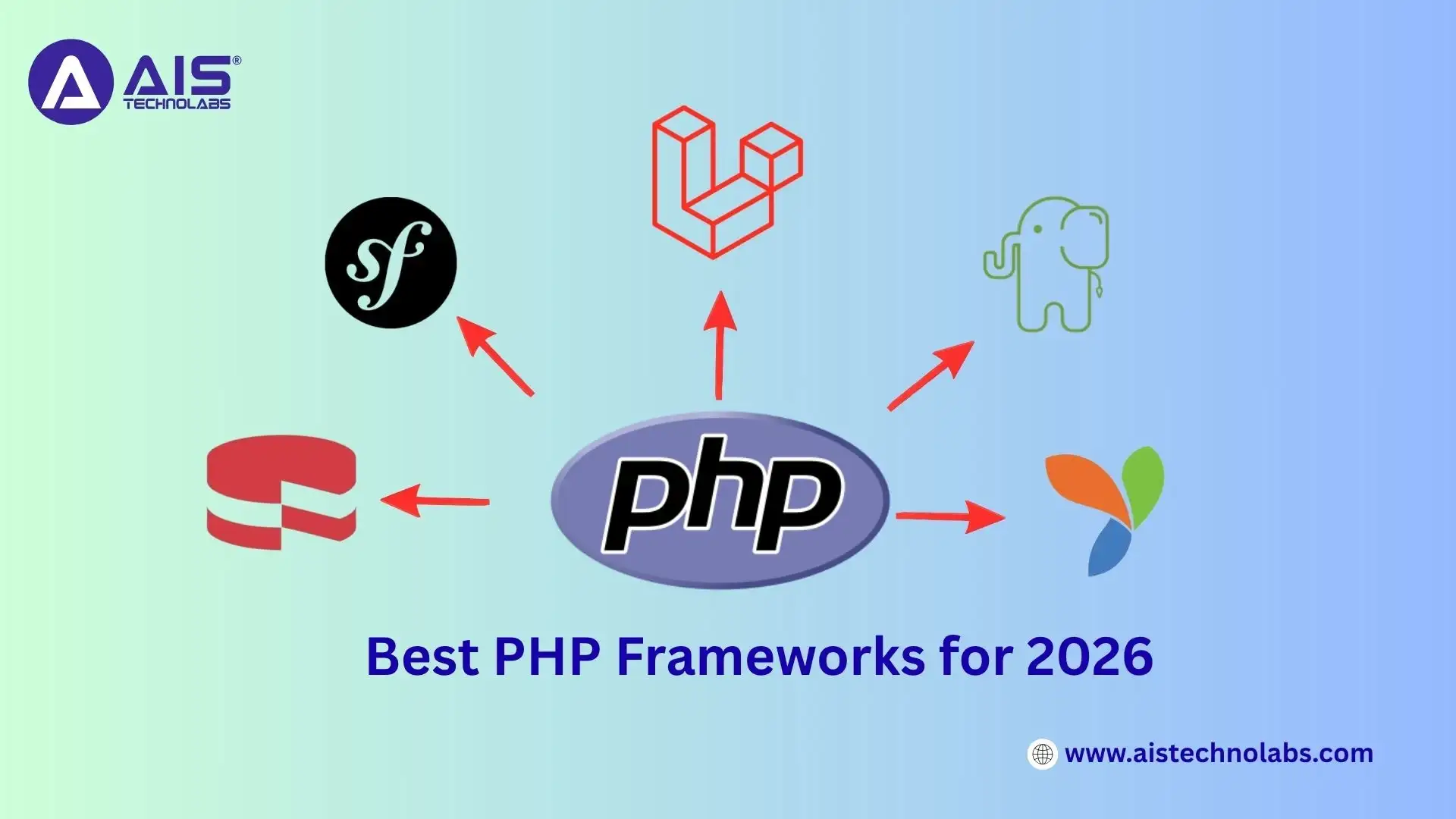
- Best PHP frameworks in 2026 for building fast, scalable, and modern web apps—from lightweight tools to powerful full-stack solutions
- Real-world comparison of Laravel, Symfony, Slim, Yii, and other top frameworks based on performance and adoption
- Made for developers, startups, and tech leads choosing a stable, future-ready PHP stack
- What really matters in 2026: speed, scalability, ecosystem strength, learning curve, and long-term support
- When to stick with legacy frameworks—and when it’s smarter to migrate
- A simple decision guide to help you pick the right PHP framework based on project size, complexity, and team skills
Quick Overview
Choosing the best php frameworks is a key step for any web project. The framework defines speed, structure, and long-term growth. It also affects security and maintenance. Businesses today need clean code and stable systems. Developers need tools that save time and reduce errors. From startups to large enterprises, the demand for structured development is rising. Different frameworks serve different goals. Some focus on speed. Others focus on flexibility. This article explains how to select the right option based on project needs.
PHP remains one of the most widely used server-side languages. It powers websites, portals, and business systems. The market now offers many choices. Selecting from the best php frameworks requires clarity. Each framework has its own strengths. Some work well for large applications. Others are ideal for small APIs. The decision should depend on scale, budget, and timeline. Whether you handle development in-house or partner with a PHP development company, a smart choice reduces development issues later. A poor choice increases cost and delays.
Why the Right Framework Matters
The structure of a framework shapes daily development work. It decides how code is written. It also defines how files are arranged. A clear structure reduces confusion. Developers can focus on building features instead of fixing messy code.
The best php frameworks provide clean architecture and reusable components. This means teams do not need to write the same logic again and again. Reusable modules save time. They also reduce human errors. Testing becomes simpler because the code follows a set pattern. Debugging also takes less effort when everything is organized.
Frameworks also come paired with powerful PHP development tools that support coding, testing, and deployment workflows. These tools extend what a framework can do and help teams maintain quality at every stage.
Key benefits include:
- Faster development cycles due to ready-made tools
- Better security control with built-in protection features
- Easier team collaboration through structured coding standards
- Long-term code stability with clear separation of logic
- Clear documentation support for quick onboarding
When the base is strong, growth becomes smoother. New features can be added without breaking existing functions. Updates become easier to manage. A well-structured framework supports steady progress and keeps projects on track.
Understanding PHP MVC Frameworks
Most modern systems follow the MVC pattern. MVC stands for Model, View, and Controller. This structure separates business logic, user interface, and data handling. Each part has a clear role. This separation keeps the code clean and organized.
Many developers choose php frameworks because they bring order to complex projects. When logic and design are mixed, errors increase. Updates also become harder. MVC solves this problem by creating boundaries between components. Teams can work on different sections without conflict.
In this pattern:
- The Model handles data and database logic.
- The View manages the user interface.
- The Controller connects the model and view.
MVC offers several advantages:
- Clear division of tasks across teams
- Improved testing through isolated components
- Organized folder structure for better navigation
- Better teamwork and collaboration
- Easier debugging when issues appear
Large projects benefit the most from this structure. When the codebase grows, organization becomes critical. A clear system reduces confusion. It also lowers the risk of breaking existing features.
New developers can understand the workflow quickly. They can identify where logic belongs. This reduces onboarding time. It also improves productivity from the start.
By using structured frameworks, companies maintain long-term stability. Projects remain easier to manage. Growth becomes smoother. The system stays flexible while maintaining order.
Yii PHP Framework for Structured Projects
The yii php framework is known for speed and efficiency. It performs well under heavy traffic. This makes it a strong choice for growing platforms. Its structure is simple and clean. Developers can configure projects without complex setup steps.
It also includes built-in tools that reduce extra work. Caching support improves loading speed. Authentication tools strengthen user security. These features save development time. They also improve system reliability.
Main strengths include:
- Fast performance for high-traffic websites
- Strong security filters to block common threats
- Clean code generation tools that reduce manual coding
- Built-in testing features for quality control
The framework works well for enterprise portals and data-heavy applications. It handles large datasets efficiently. It also supports structured expansion when business needs grow. Many teams prefer it for stable and secure long-term projects.
CakePHP Performance and Stability
Many businesses focus on speed and reliability. Cakephp framework performance is often discussed when stability matters. CakePHP follows a clear structure. It uses strict coding standards. This helps developers maintain consistency across projects.
The framework reduces setup time. It offers ready-to-use tools. Developers can start building features without long configuration steps. Its organized layout makes navigation simple. This lowers the risk of confusion during development.
Advantages include:
- Quick setup for faster project start
- Strong database support with built-in ORM
- Built-in validation tools for cleaner data handling
- Clear routing system for better URL management
Slim PHP Framework for Lightweight APIs
The slim php framework is ideal for small applications and APIs. It is simple and flexible. It does not add unnecessary layers.
Key features:
- Minimal setup
- Fast response time
- REST API support
- Easy middleware integration
It works best for microservices and lightweight systems.
Comparing the Best PHP Frameworks for Business Needs
Every project has different needs. The best php frameworks are not the same for every case. The right choice depends on project size and long-term plans. Large enterprise systems often require stronger security and structured architecture. Smaller projects may focus more on speed and simple setup.
Before making a decision, it is important to review key factors. A careful comparison prevents future issues. It also reduces the need for costly changes later.
When comparing options, consider:
- Project scale and expected traffic
- Team experience with specific frameworks
- Hosting environment and server support
- Future expansion plans and feature growth
- Budget limits and timeline constraints
Each of these points affects the final outcome. A framework should match business goals. It should also support smooth development and future upgrades. Making a thoughtful choice at the start leads to better results.
Security Considerations in Frameworks
Security must always come first in web development. A single weakness can expose user data. It can also damage business reputation. Many php mvc frameworks include built-in protection tools. These tools reduce common risks. They also help developers follow safe coding practices.
Modern applications face constant threats. Attackers target login forms, payment pages, and databases. Without proper safeguards, systems become vulnerable. Using frameworks with built-in security layers lowers this risk. It saves time and prevents costly breaches.
Common security features include:
- CSRF protection to block unauthorized form submissions
- Input validation to prevent harmful data entry
- Password hashing to secure user credentials
- Role-based access control to manage user permissions
- Session management to protect logged-in users
These features work together to create a safer system. Developers do not need to build every protection tool from scratch. The framework provides a strong base.
Secure code protects sensitive information such as emails, passwords, and transaction records. It also builds customer trust. Users feel safer when platforms handle data responsibly.
Security is not a one-time task. It requires regular updates and monitoring. A structured framework makes these updates easier. With proper implementation, businesses reduce risks and maintain stable operations over time.
When to Choose Yii PHP Framework
The yii php framework is a strong option for structured systems. It handles large databases efficiently. It also supports fast caching methods.
It is suitable for:
- E-commerce platforms
- Business dashboards
- CRM systems
- Data-driven portals
Its modular design supports steady growth.
Evaluating CakePHP Performance for Large Platforms
Many developers analyze cakephp performance before selecting it. It handles database operations efficiently. It also supports reusable code patterns.
Performance improves when:
- Queries are optimized
- Caching is configured
- Routing is structured well
CakePHP works well for medium to large business sites.
Why Developers Prefer Slim PHP Framework
The slim php framework attracts teams building APIs. It keeps code minimal. It reduces load time.
It is helpful for:
- Microservices
- Mobile backends
- Simple REST services
- Lightweight web apps
Its simplicity allows quick deployment.
Trends Shaping the Best PHP Frameworks
Technology trends influence the best php frameworks in use today. Developers now focus on speed and clean APIs. Cloud hosting also affects decisions.
Current trends include:
- API-first development
- Modular architecture
- Headless systems
- Automated testing
Frameworks that adapt to these needs stay relevant.
Performance and Speed Factors
Speed is not only about hosting quality. Server power matters, but code structure matters more. The best php frameworks include built-in tools that improve performance. They support caching systems and better database control. This reduces repeated processing. It also lowers server load.
When a framework handles requests efficiently, pages load faster. Users notice this immediately. Slow systems frustrate visitors. Fast systems improve engagement and retention. A structured framework helps maintain consistent speed as traffic grows.
Important factors that affect performance include:
- Efficient routing to direct requests quickly
- Clean middleware that avoids unnecessary layers
- Query optimization to reduce database load
- Proper indexing for faster data retrieval
- Built-in caching mechanisms for repeated data
Each factor plays a role in overall speed. Even small delays can add up. Clean architecture prevents cluttered logic. It ensures that only required processes run in the background.
Performance also depends on disciplined coding. When developers follow framework standards, the system remains organized. This reduces memory waste. It also improves response time. Many businesses choose to hire PHP developers who already understand these standards, so performance best practices are applied from day one rather than corrected later.
With structured planning and the right framework, applications remain stable under pressure. Speed becomes consistent. Growth becomes easier to handle without major system slowdowns.
Growth Planning with PHP MVC Frameworks
Scaling is important for growing companies. Many frameworks allow easy module expansion. They support structured updates.
Growth becomes easier with:
- Modular code
- Version control
- Clear documentation
- Testing pipelines
This reduces future redevelopment.
Balancing Flexibility and Structure
The best php frameworks offer both structure and freedom. Developers need rules. They also need flexibility for custom features.
Balanced systems:
- Support plugins
- Allow custom routing
- Offer database abstraction
- Maintain coding standards
This balance helps long-term projects succeed.
Conclusion
Selecting from the best php frameworks requires careful planning. Each framework serves a purpose. Project goals should guide the decision. Testing and prototyping can also help.
The yii php framework suits structured systems. Strong performance benefits business portals. The slim framework works well for APIs. Many frameworks follow similar architecture but differ in tools and community support.
In conclusion, making the right framework choice requires technical clarity and business focus. AIS Technolabs supports companies in selecting and implementing suitable PHP solutions that match their project needs.
FAQs
Ans.
The best php frameworks depend on project size and goals. Yii works well for structured platforms. Slim is ideal for APIs. CakePHP suits stable business systems.
Ans.
The yii php framework offers caching, security tools, and modular coding. It handles high traffic efficiently.
Ans.
Yes. Cakephp performance supports optimized queries and structured routing. It works well for medium and large platforms.
Ans.
The slim php framework is lightweight and fast. It simplifies REST API development.
Ans.
Yes. Php mvc frameworks provide organized structure and easier maintenance. They support team collaboration and scaling.

Harry Walsh
Harry Walsh, a dynamic technical innovator with 8 years of experience, thrives on pushing the boundaries of technology. His passion for innovation drives him to explore new avenues and create pioneering solutions that address complex technical problems with ingenuity and efficiency. Driven by a love for tackling problems and thinking creatively, he always looks for new and innovative answers to challenges.
 ASIA PACIFIC